Reimagining Food in Art & Design
This project invited students to delve into the relationship between food and creative practice by selecting a seminal work from the field of food in art or design. Through in-depth research, they explored the historical, cultural, and geographical context of the chosen work, analyzing its themes, materials, audience, and conceptual intentions. Building on this foundation, students then reimagined the piece in a contemporary context—responding to current environmental issues, cultural shifts, and technological developments. The goal was to reinterpret the original work in a way that maintained its essence while addressing today’s realities. The final submission included a written analysis and a visual reinterpretation of the work through sketches, models, or digital renderings, culminating in a presentation that showcased both critical thinking and creative transformation.
Students’ Projects
Abner Aamir
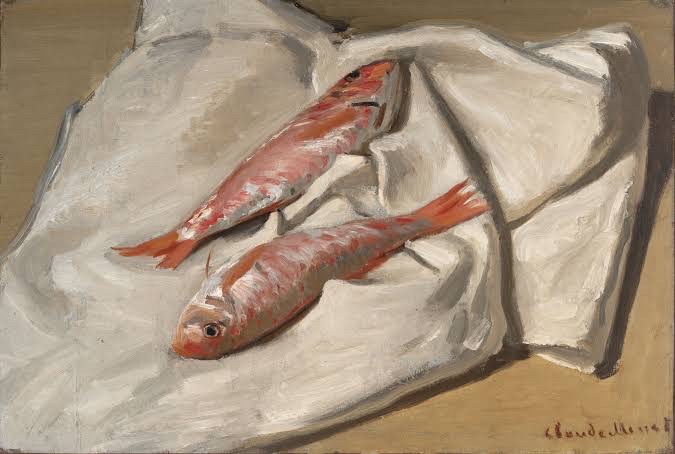
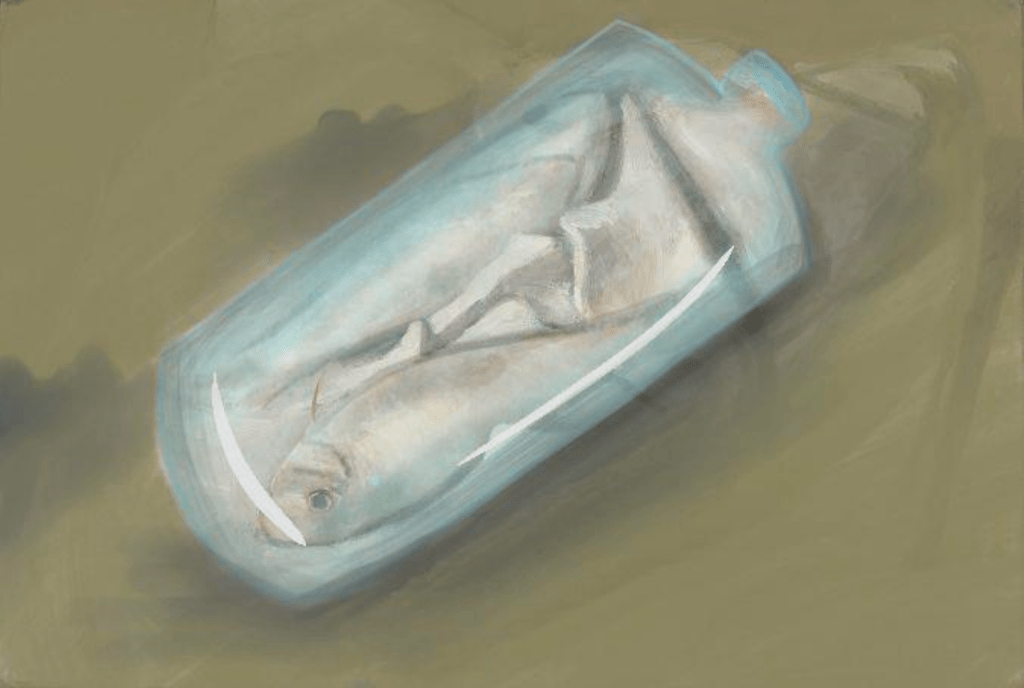
Claude Monet’s Red Mullets
The work I have chosen, which fits well within the context of food and design, is Claude Monet’s Red Mullets (1882). This piece holds an important place in the history of Impressionism, reflecting the deep connection between the natural world and everyday life. Monet painted it while living in the French coastal town of Étretat, Normandy—a location that greatly inspired his focus on marine life. The geographical context is key, as this was a period when Monet was deeply interested in capturing nature, landscapes, and seascapes. In Red Mullets, Monet uses soft hues of pinks, oranges, and reds to contrast against a muted background, highlighting the beauty of the fish. Painted in oil on canvas, his impressionist technique—marked by quick brushstrokes—brings a sense of light, texture, and movement. While the painting is not among Monet’s most famous works and lacks a documented intended message, it may reflect either the luxury status of red mullet at the time or simply his fascination with its natural beauty. Either way, the piece invites the viewer to appreciate the quiet elegance of life.
Reimagined Work
To reimagine Red Mullets today means addressing pressing contemporary concerns—especially environmental degradation and overconsumption. While Monet celebrated the natural beauty of marine life, today’s oceans face pollution, overfishing, and the consequences of climate change. In my reinterpretation, the once vibrant fish become transparent forms, marked with traces of pollutants to reflect the contaminated state of modern marine ecosystems. Instead of the clean coastal setting of Étretat, the fish would be placed in a polluted harbour—surrounded by murky water, oil slicks, and industrial waste. The shift in palette from vibrant to dull tones would communicate loss: of beauty, of health, and of balance. This reimagined work becomes a call to action—a reflection on how consumer culture and the global food industry have contributed to ecological damage. Through this adaptation, Monet’s legacy is preserved but transformed into a powerful commentary on sustainability and environmental responsibility in today’s world.
Mahnoor Khan
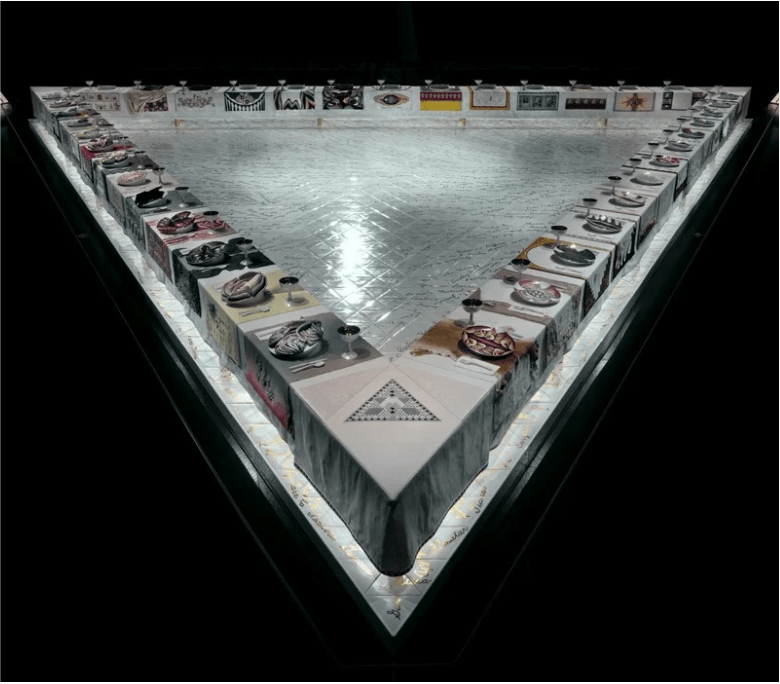
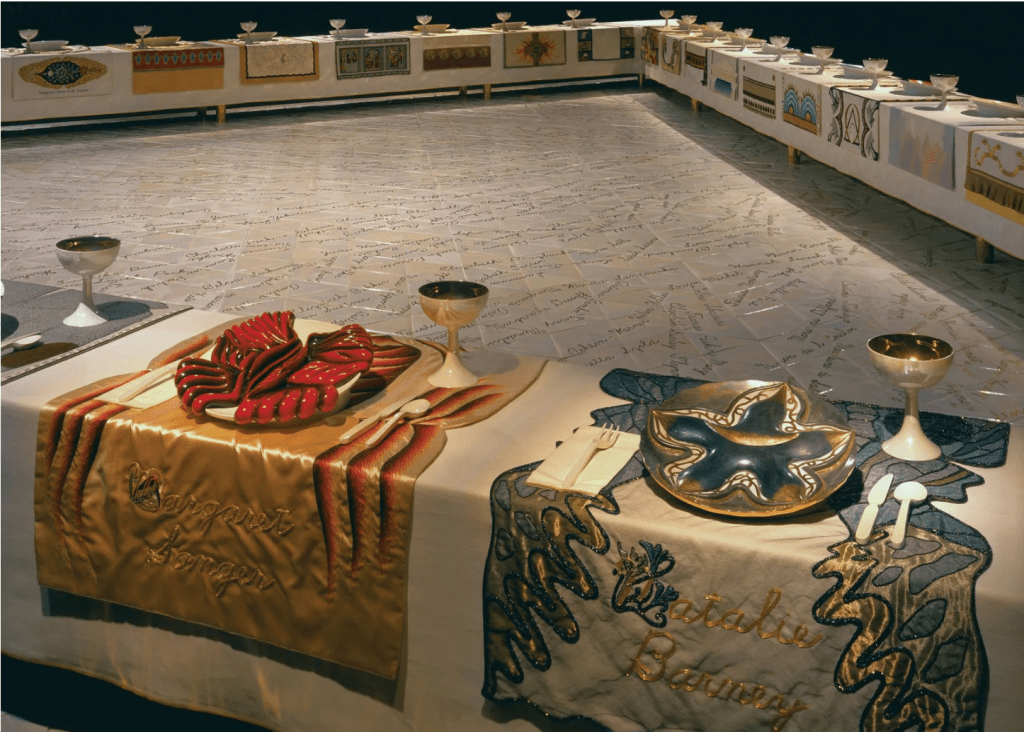
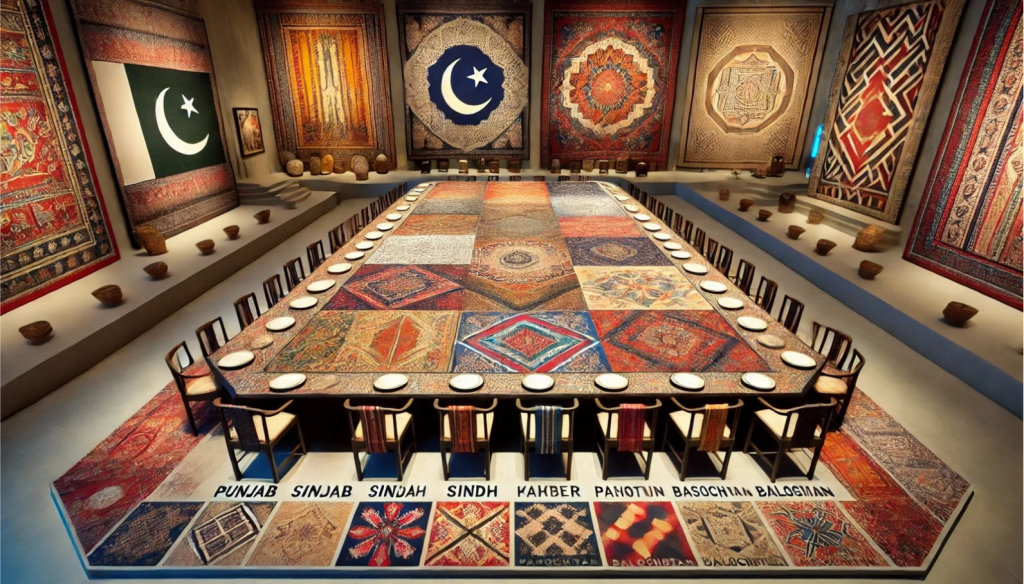
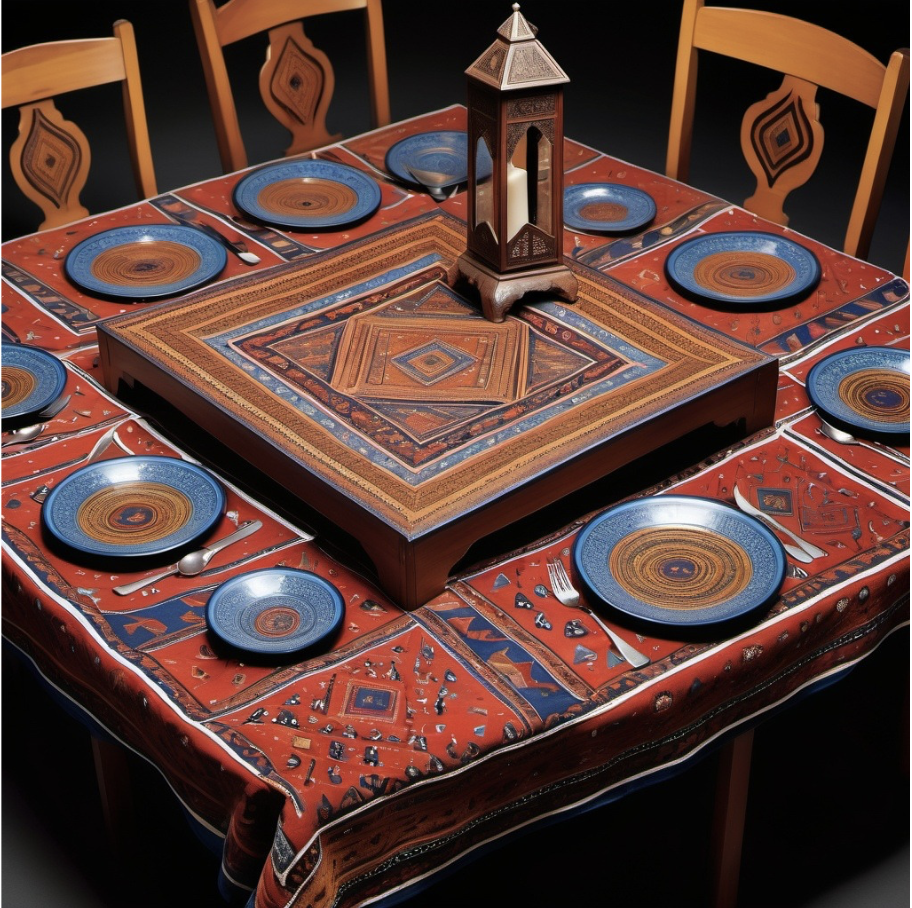
Judy Chicago’s Dinner Table
The Dinner Party (1974–1979) by feminist artist Judy Chicago is a landmark work of the second-wave feminist movement, created to challenge the male-dominated art world and reclaim women’s erased history. Inspired by the Women’s Liberation Movement, the installation features a large triangular table—symbolizing equality and sacred femininity—set for 39 influential women, each represented through vulva-inspired ceramic plates and embroidered table runners reflecting their cultural context. Beneath the table, the “Heritage Floor” honors 999 additional women, emphasizing collective female contributions across time. By using decorative arts traditionally dismissed as “women’s work,” Chicago boldly elevates feminine craft, sparking critical conversations about gender, power, and visibility. Now permanently housed at the Brooklyn Museum, it remains a powerful symbol of feminist resistance and historical rewriting.
Reimagined Work
The reimagined version of The Dinner Party celebrates the contributions of women in Pakistan’s rich cultural and historical landscape. Designed as a four-sided table representing the country’s provinces—Punjab, Sindh, Khyber Pakhtunkhwa, and Balochistan—it symbolizes national unity and shared female experiences. Each side features traditional crafts such as phulkari, ajrak, mirror work, Pashtun embroidery, and Balochi needlework. The base honors countless overlooked Pakistani women, including freedom fighters, activists, minorities, and rural voices. Incorporating interactive QR codes and using sustainable materials like recycled textiles and local clay, this adaptation bridges feminism with environmental awareness while preserving cultural identity.
Malaika Ali
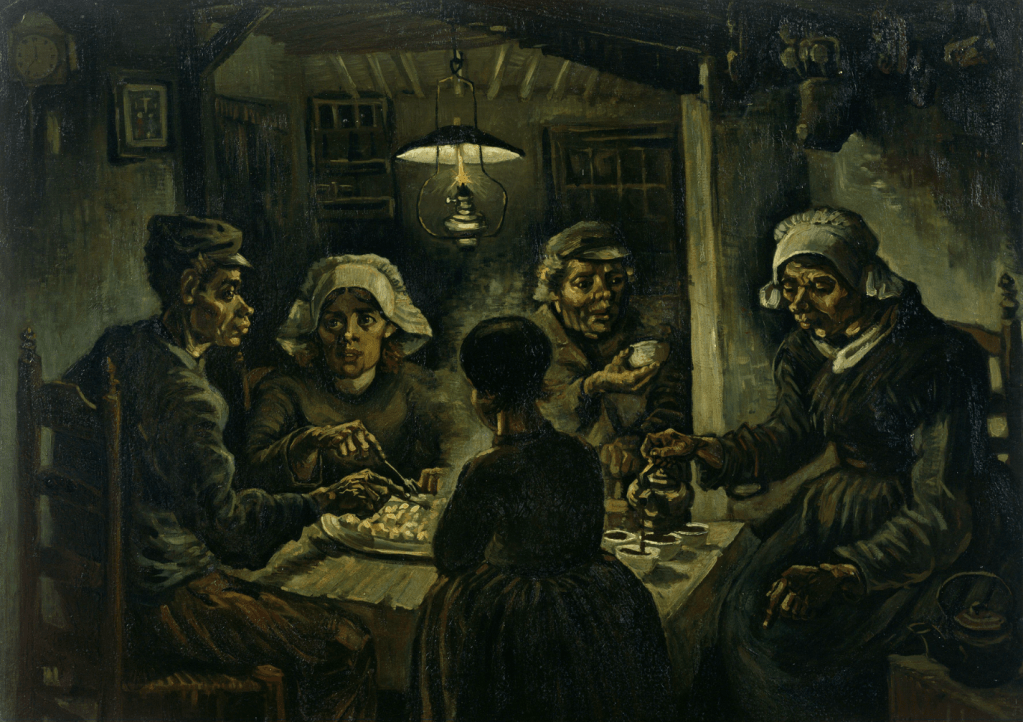
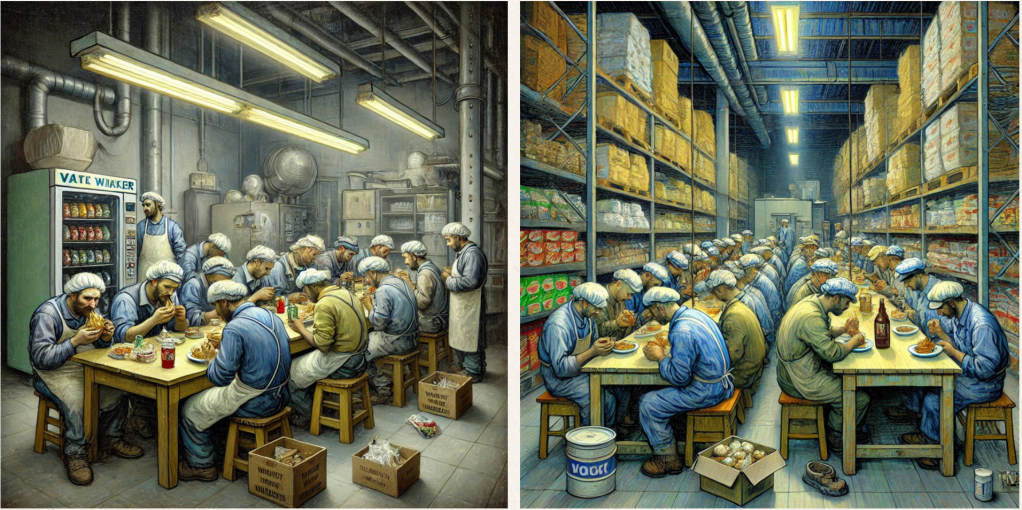
Vincent Van Gogh’s The Potato Eaters
Vincent van Gogh’s The Potato Eaters (1885) is a powerful early work reflecting his commitment to portraying the harsh realities of rural peasant life. Painted in the Dutch village of Nuenen, it aligns with the social realism movement and was influenced by artists like Jean-François Millet. The earthy tones, dim lighting, and expressive brushstrokes emphasize the workers’ toil and connection to the land. Through their humble potato meal, Van Gogh highlights themes of dignity, struggle, and human endurance. Avoiding idealisation, the painting aimed to evoke empathy and showcase raw truth. Though initially criticised, it is now seen as a seminal piece of social realism.
Reimagined Work
This contemporary reinterpretation of Vincent van Gogh’s The Potato Eaters shifts the scene from a rural home to a supermarket break room or food processing facility, highlighting the struggles of modern food industry workers. Surrounded by shelves of mass-produced goods they can’t afford, under harsh fluorescent lighting, workers eat cheap, unappetizing meals—revealing the stark irony of food insecurity within a sector that feeds millions. The sterile, industrial setting contrasts with the warmth of van Gogh’s original, emphasizing how technology and capitalism have stripped food of its communal and emotional value. This version critiques economic inequality, labour exploitation, and the environmental and social costs of industrialised food systems.
Meerub Mustanser Bhandara
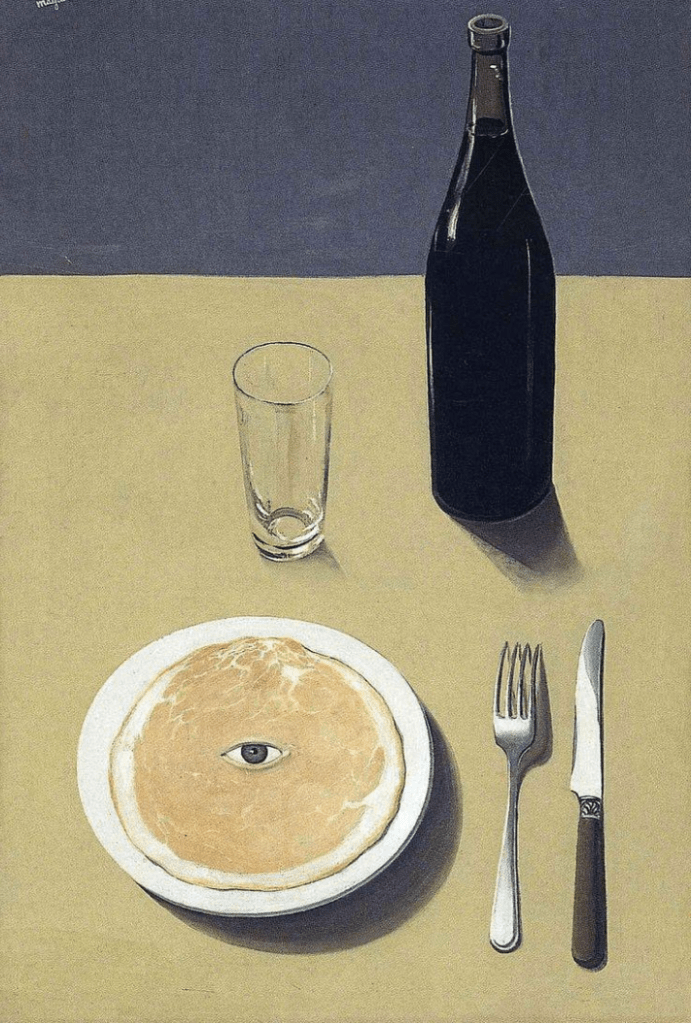
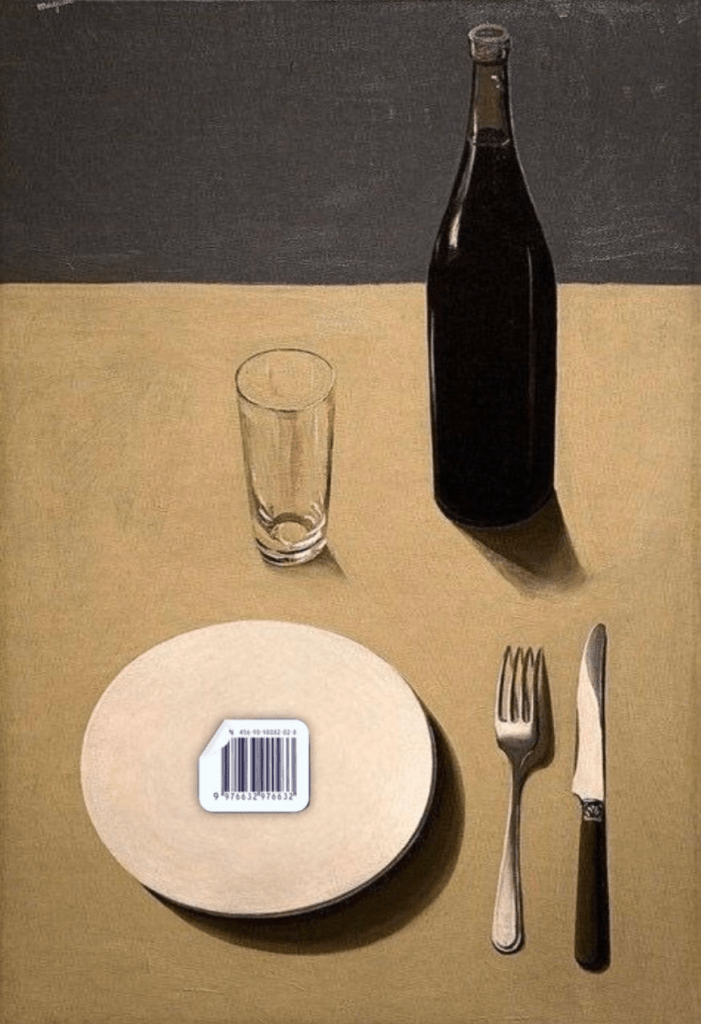
René Magritte’s The Portrait
Rene Magritte’s The Portrait (1935) is a compelling example of surrealist art that uses food to explore perception, the uncanny, and the subconscious. By placing a human eye in the center of a slice of meat on a dinner plate, Magritte disrupts the familiar, turning a mundane meal into something unsettling. This manipulation questions reality, self-awareness, and the act of consumption. Like in The Listening Room (1952), where a giant apple fills an entire room, Magritte uses food not just as a subject, but as a tool to challenge logic and perception. His work blurs the line between illusion and reality, urging viewers to look beyond the ordinary.
Reimagined Work
This reimagining of Magritte’s The Portrait maintains its surreal essence while addressing contemporary issues of consumerism, food production, and digital consumption. Replacing the eye and meat with a barcode highlights the shift from food as nourishment to a commodified, industrial product, symbolizing artificiality and corporate control. The piece critiques how food is now shaped by data, branding, and technology, reflecting a world where consumption is tracked and marketed rather than naturally grown. It raises urgent questions about our loss of connection to food and the human experience in an era dominated by surveillance and consumer culture.
Nida Rehman
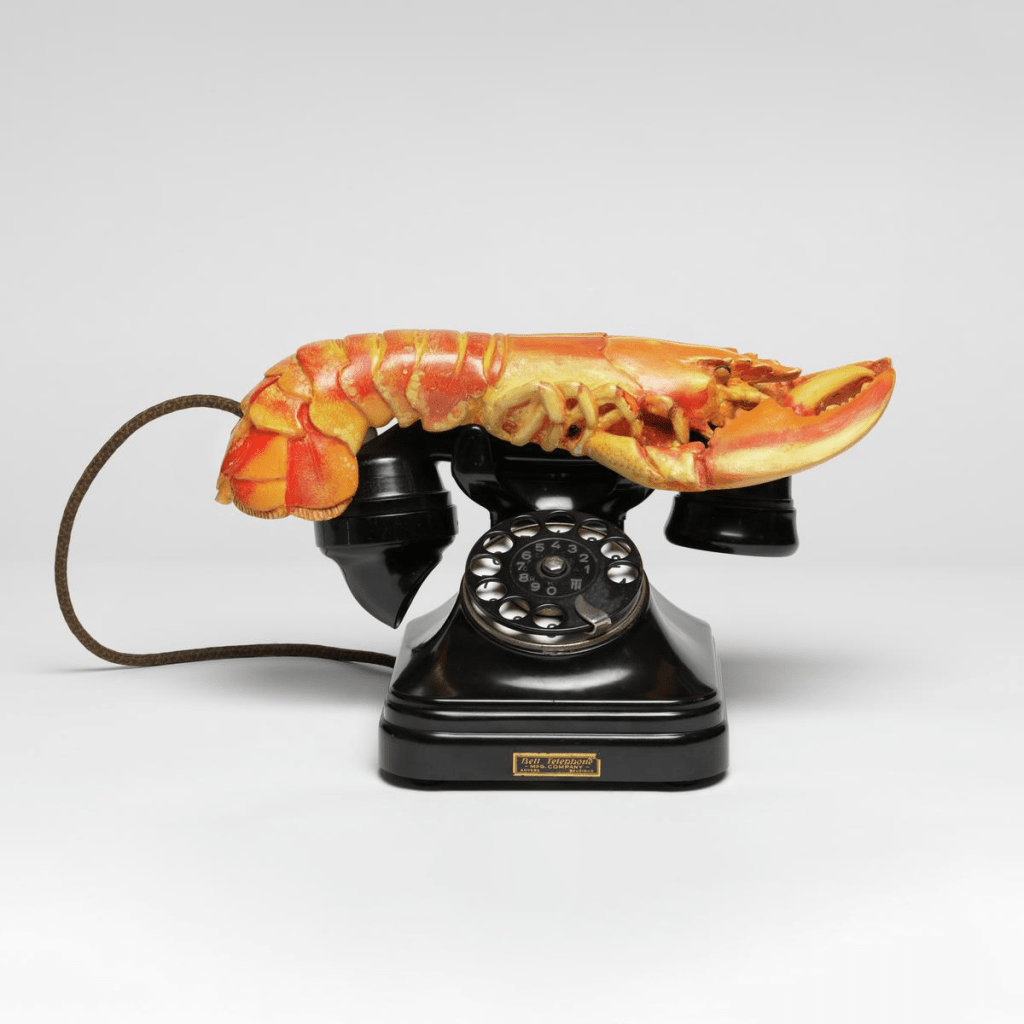
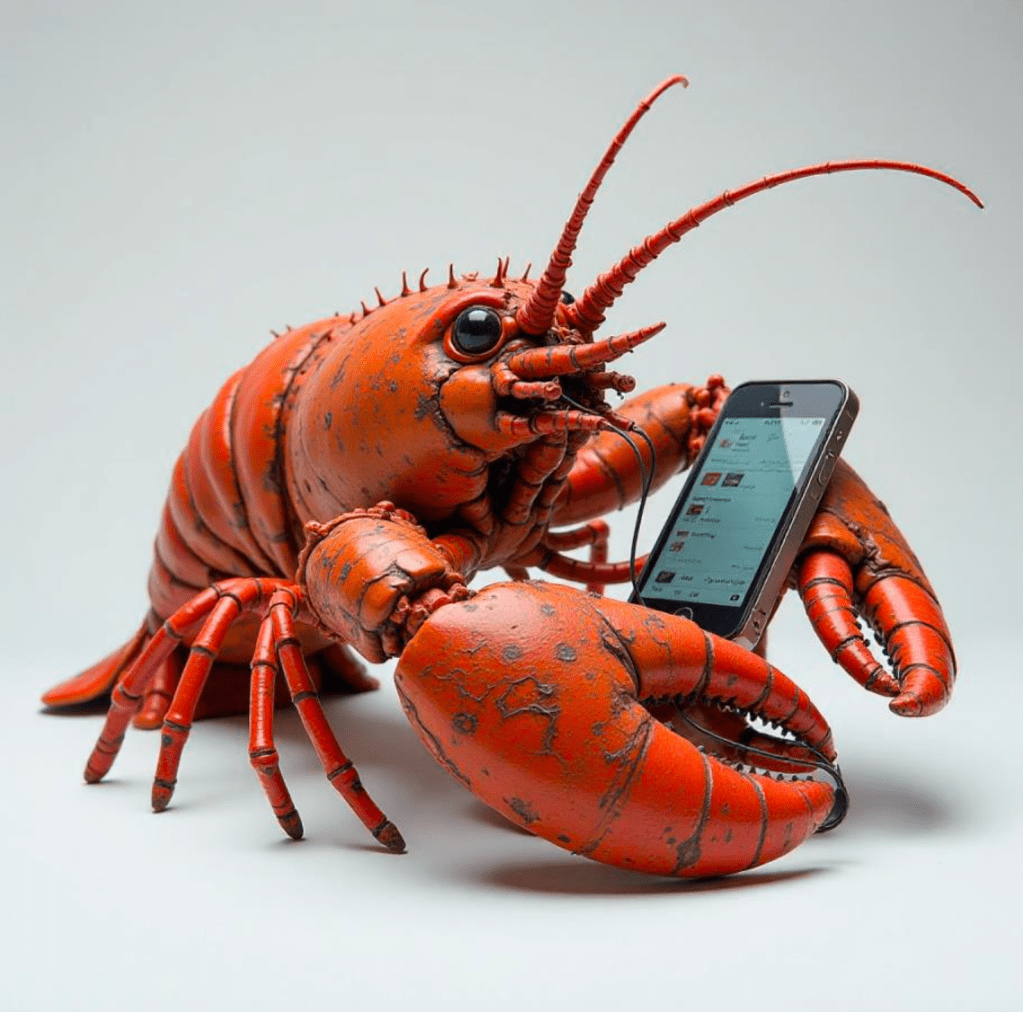
Salvador Dali’s The Lobster Telephone
Salvador Dalí’s The Lobster Telephone (1936) was created for his friend and English nobleman Edward James. This surrealist sculpture features a phone with a lobster replacing the receiver, symbolizing the absurd triumph over reality. Dalí’s imaginative and unconventional style is evident in this work, which transforms the mundane into the extraordinary, capturing viewers’ attention with its bizarre yet captivating form. The lobster, a Dalí motif, represents lust and sexuality, reflecting Surrealism’s deep ties to both art and fashion. Edward James, as a key patron of the Surrealist movement, supported Dalí and helped bring such visionary pieces to life
Reimagined Work
The artwork can be reimagined today to highlight urgent environmental issues like ocean pollution, climate change, and biodiversity loss. The lobster figure could be reconstructed using cigarette butts and microplastics to symbolize polluted oceans and marine life destruction. Its body might be sculpted from tangled discarded technology, plastic straws, and wires, representing human-created waste harming ecosystems. Meanwhile, the telephone itself could be redesigned to connect via the internet and made from upcycled materials, symbolizing recycling amid rampant consumerism and planned obsolescence. This updated sculpture challenges viewers to reflect on the tension between sustainability and modern society, where communication tools have evolved but disconnection remains prevalent. The lobster, once a natural symbol, now trapped within synthetic waste and digital technology, embodies how overconsumption and technology have distanced us from nature and each other. Ultimately, this adaptation urges us to reconsider progress and explore ways to reconnect with both nature and humanity.
Qazi Abdul Ahad
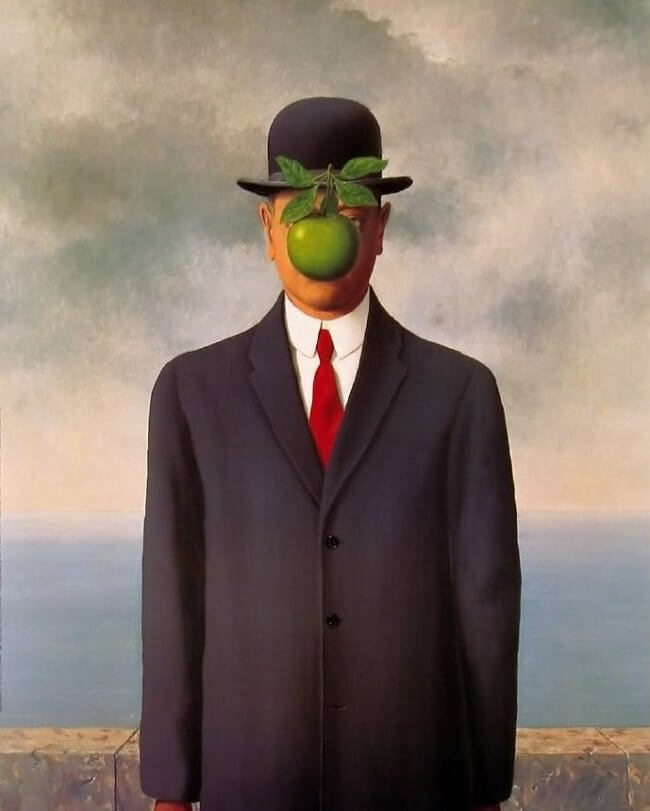
René Magritte’s The Son of a Man
René Magritte’s The Son of Man (1946) is a surrealist painting portraying a man in a bowler hat with his face obscured by a hovering green apple. Created in post-war Europe, the work reflects anxieties of modern life and the struggle between personal identity and societal conformity. The bowler hat symbolizes bourgeois uniformity, while the apple—evoking biblical notions of temptation—adds mystery (Gablik, 1976). By concealing the face, Magritte subverts traditional portraiture, questioning how identity is perceived. Rendered in Magritte’s realistic yet subtly distorted style, the painting’s background of cloudy sky and distant sea suggests isolation and ambiguity. The levitating apple disrupts logical perception, in line with surrealist views on reality and consciousness (Whitfield, 2003). As Magritte stated, the painting explores “the conflict between the visible that is hidden and the visible that is present,” reflecting how individuals remain both seen and unseen in society. Aimed at both the general public and those engaged with surrealist thought, The Son of Man remains a powerful meditation on identity, perception, and social expectations.
Reimagined Work
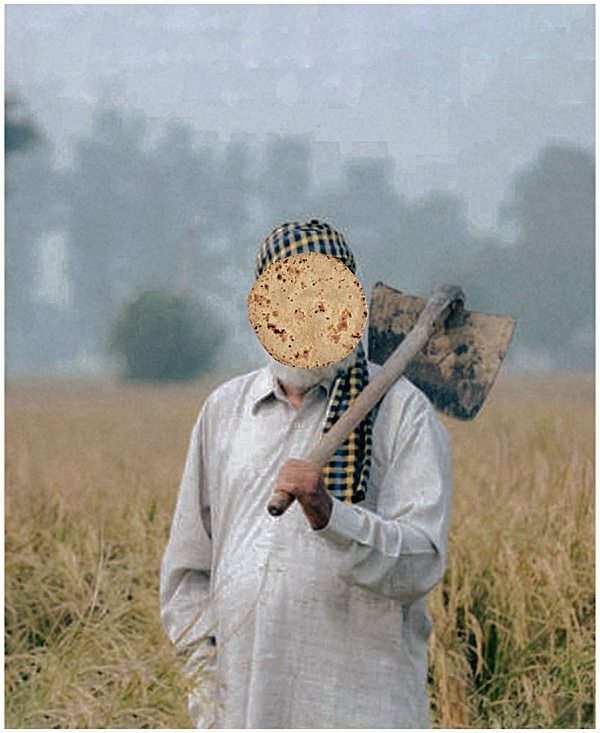
Reimagining René Magritte’s The Son of Man in South Punjab, Pakistan, the bowler-hatted man is replaced by a rural farmer in traditional Shalwar Kameez, his face obscured by a floating roti (flatbread). This adaptation shifts the original’s themes of identity and concealment to issues of labor, food insecurity, and economic inequality. The roti symbolizes survival, yet also deprivation—reflecting how those who feed the nation cannot feed themselves. Growing up in South Punjab, I’ve seen farmers endure harsh conditions, now worsened by climate change. This reinterpretation critiques how capitalist systems value the product—food—while erasing the producers. It references Marx’s idea of commodity fetishism, highlighting the disconnect between urban consumers and the labor behind their food. Culturally grounded in rural South Punjab, the piece portrays the farmer as faceless and forgotten, amid a background of environmental degradation and migration-driven village decline. The hovering roti mirrors Magritte’s apple in its surrealism but layers meaning around nourishment and neglect. Ultimately, this reimagining honors Magritte’s exploration of visibility and identity, while addressing contemporary issues of exploitation, environmental collapse, and the invisibility of rural laborers who remain essential yet unseen.
Tayyaba Amir
Beth Galton’s Food Loss
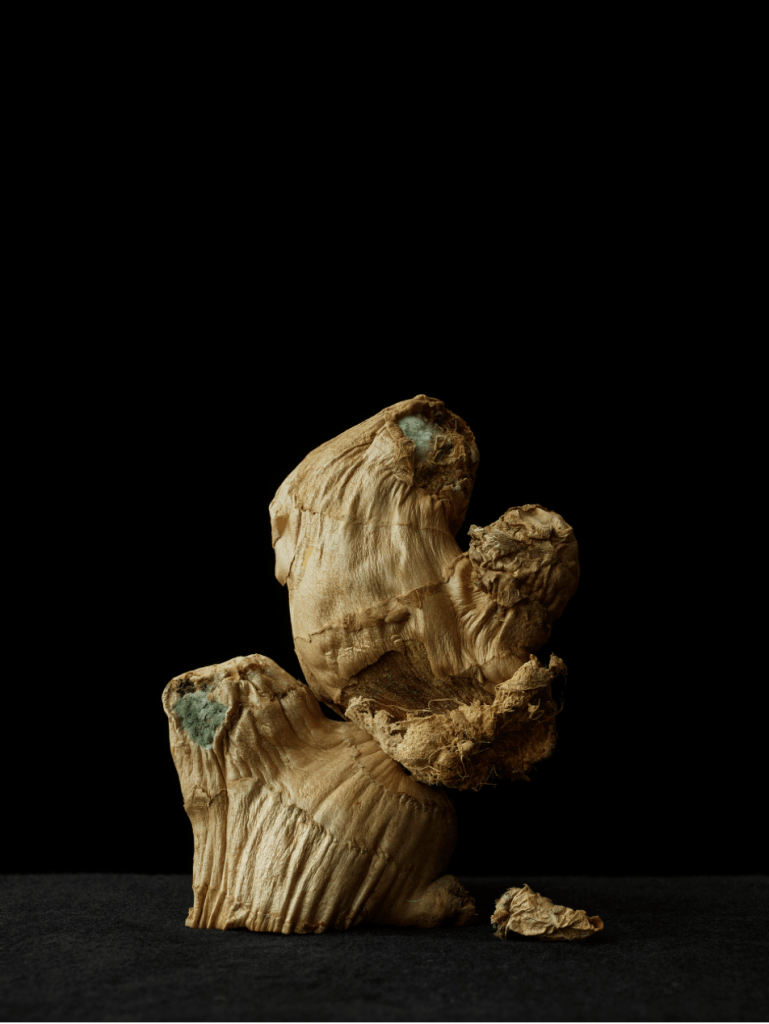
Beth Galton’s Food Loss series explores food aestheticization and waste in contemporary U.S. culture. In a society that prioritizes visual perfection, naturally blemished or aging produce is discarded, deepening the disconnection between humans and nature’s organic cycles. Through minimalist photography, Galton captures the beauty of flawed, decaying food against stark backdrops, celebrating imperfection and questioning societal norms of food beauty. Her work transforms discarded fruits and vegetables into visual metaphors that critique wasteful consumer habits. The series underscores themes of impermanence, sustainability, and the value of the overlooked. Galton urges viewers—especially consumers and industry stakeholders—to reassess their perceptions of edibility and embrace a more mindful, less wasteful relationship with food.
Reimagined Work
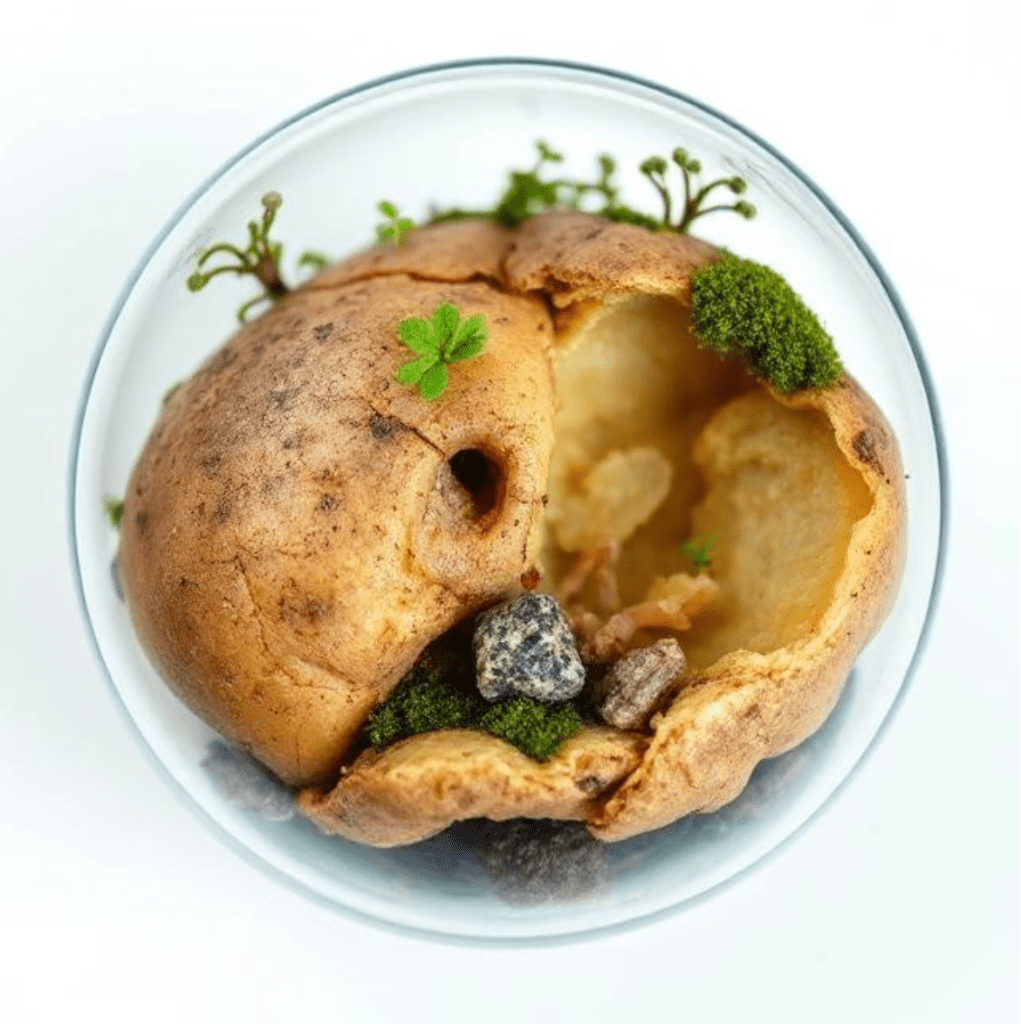
Observing food beyond sustenance, it becomes a vessel of history, memory, and transformation. While Beth Galton views food decay as loss, I reimagine it as rebirth. Decomposition is not an end, but a vital transition—organic matter returns to the earth, nurturing new life. Rotting food fosters ecosystems: seeds germinate, mold supports biodiversity, and compost enriches soil. Even fermentation, a form of controlled decay, transforms food into something new and valuable. These processes reveal decay’s regenerative power. Food decomposes through interaction with its environment—moisture, temperature, and microbes shape its fate. By viewing decay as fertility, we shift from loss to renewal, recognizing food’s impermanence as part of nature’s cyclical rhythm. Decay becomes a living, transformative archive.
Zahra Scherezade Salman Zia
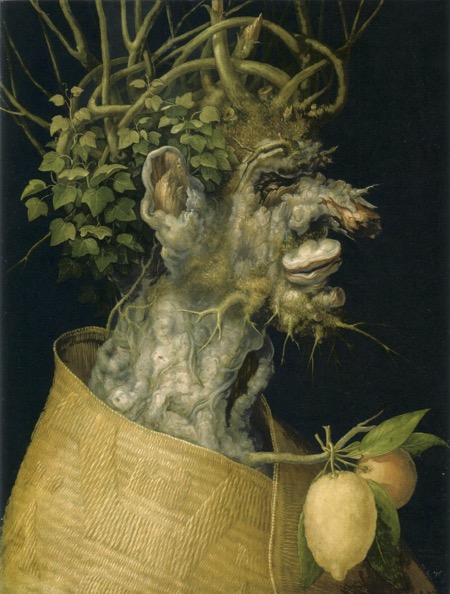
Giuseppe Arcimboldo’s Four Seasons
This series reflects the Renaissance fascination with nature, science, and humanism. Born in Milan in 1526, Arcimboldo served as a court painter for the Habsburgs, creating portraits made entirely of fruits, vegetables, and flowers. These works weren’t just whimsical—they symbolized the deep connection between humans and the natural world, aligning with the era’s growing interest in botany and anatomy. Each season in the series is represented through seasonal plants, portraying the cycle of life. For example, Spring features blooming flowers, while Winter uses bare branches and bark, echoing themes of growth and decay. His clever, lifelike compositions were puzzles for the elite, full of symbolism and hidden meanings. Arcimboldo’s detailed, imaginative designs appealed to the intellectual tastes of the Habsburg court. Though playful, his work explored powerful ideas like transformation, impermanence, and nature’s role in human life—concepts that remain relevant and continue to inspire artists today.
Reimagined Work
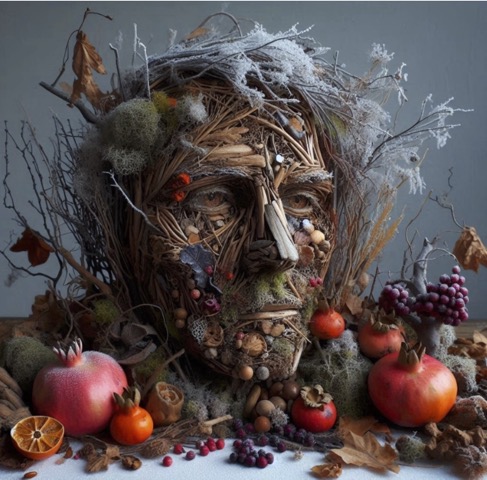
If I were to reimagine Arcimboldo’s Four Seasons, I’d choose Winter (1563), I’d transform it into a sculptural installation using real dried plant materials—bark, moss, branches—shaped into a face emerging from a tangled mass. Resin ice droplets would hang from the branches, catching light like frozen dew, while soft, shifting lights would cast shadows to make the figure feel alive. Unlike the original static portrait, this piece would be immersive and walkable, letting viewers engage from all sides. To add a personal layer, parts of the bark would peel back to reveal delicate floral imprints—hinting at life hidden beneath the surface. Winter fruits like pomegranates, persimmons, and berries would be integrated into the sculpture. Their rich reds and oranges would contrast with the brittle bark, some split open or crystallized, symbolizing both decay and renewal. For me, winter isn’t just an end—it’s a quiet in-between, where something is always waiting to bloom.
Zikriya Tariq
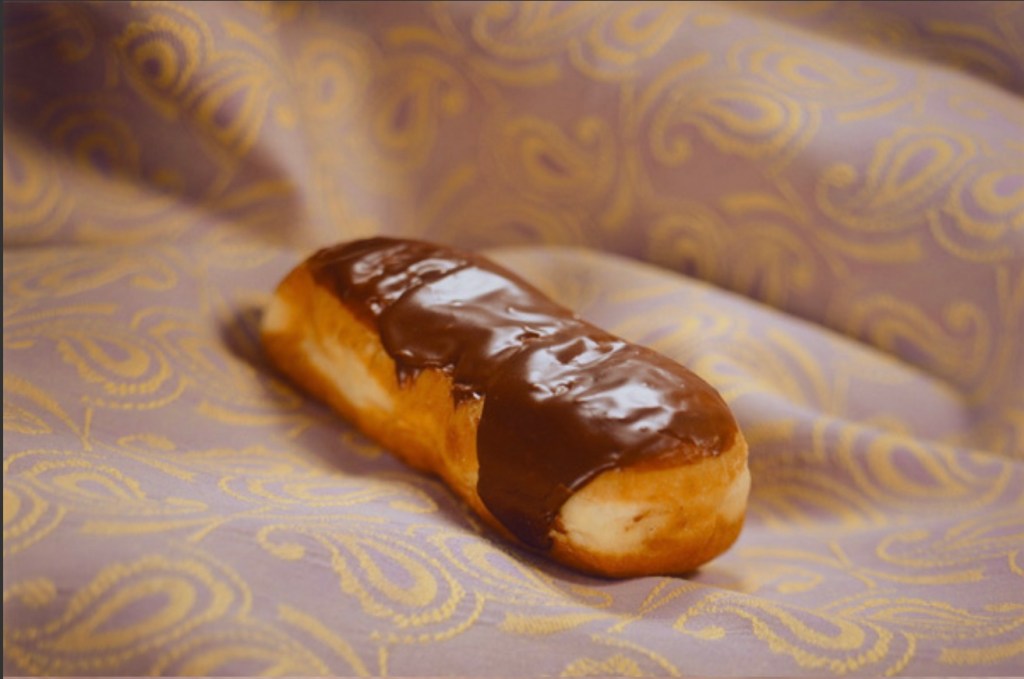
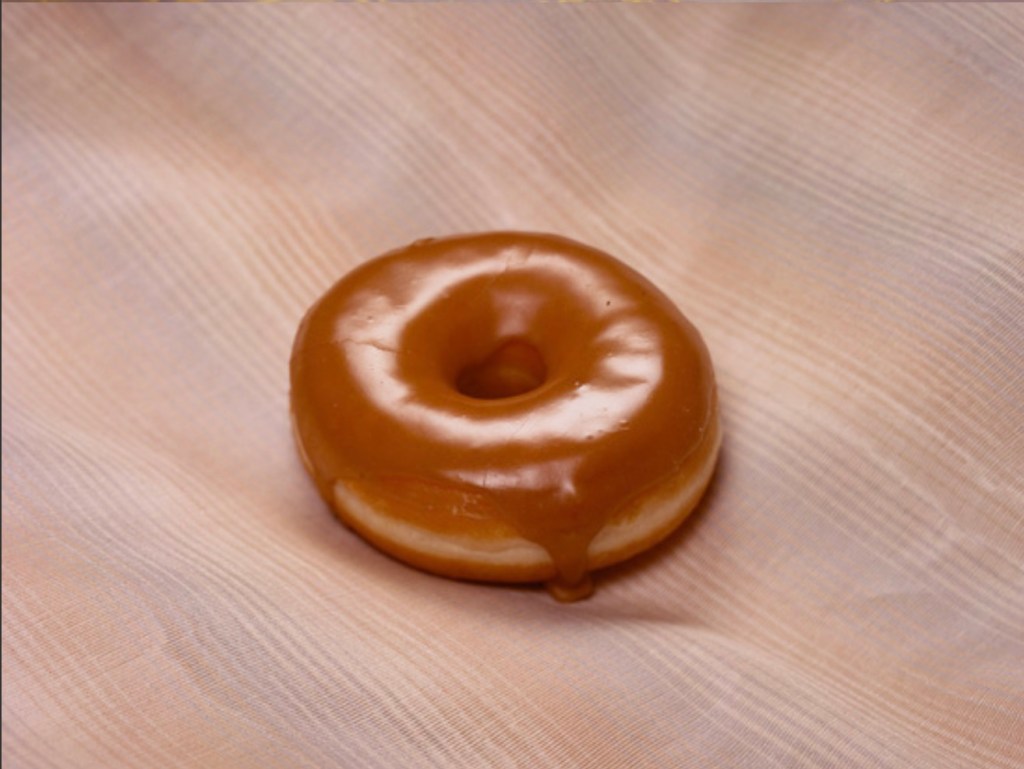
Jo Ann Callis’s Cheap Thrills
This series of work explores the themes of desire, sensuality, and the erotic within the mundane. Featuring staged photographs of store-bought desserts like cream puffs and doughnuts, the series transforms them into suggestive, anthropomorphic forms through rich textures, plush backdrops, and strategic lighting. Callis deliberately pairs ordinary sweets with luxurious materials, creating visual tension that blurs the line between edibility and eroticism. This reflects her broader interest in domesticity, intimacy, and the subconscious. The series challenges traditional ideas of sexuality and domestic life, encouraging viewers to reconsider everyday sensuality and societal taboos. Aimed at audiences interested in provocative contemporary art, Cheap Thrills invites introspection into the intersections of food, desire, and the body.
Reimagined Work
Jo Ann Callis’s Cheap Thrills blends food with surreal, unsettling imagery to explore desire, pleasure, and control. Reimagined today, the series could reflect growing concerns about sugar consumption and its health impacts, especially diabetes. A modern Cheap Thrills might feature desserts paired with insulin syringes or sugar cubes melting into warning labels—highlighting the contrast between indulgence and consequence. The visuals could be more chaotic, showing sweets alongside blood sugar monitors and test kits to emphasize the tension between pleasure and health. Themes of food advertising and societal contradictions would also be key, with desserts styled like medication to show how marketing both tempts and cautions us. Digital tools, augmented reality, or interactive elements could reflect sugar’s effect on perception and the body over time. While updated for today’s context, this version would retain the surreal humor and discomfort of Callis’s original work, asking deeper questions about how our relationship with sugar, pleasure, and health has evolved.


 Laiba Aslam