Communal Dining
This assignment focused on understanding the significance of communal dining as a catalyst for connection, empathy, and community building. Students were introduced to a range of case studies where food was used as a participatory medium by artists, designers, and cultural practitioners to break social boundaries, generate dialogue, and create shared rituals. They reflected on how collective eating experiences go beyond nourishment, offering opportunities for care, hospitality, storytelling, and inclusivity. Divided into three groups, the class was tasked with conceptualizing and curating a communal food experience for a broader audience. Each group approached the brief through different themes, audiences, and formats—designing spaces that encouraged interaction and emotional engagement. The outcome was a series of three collaborative events that invited participants to connect through food, reinforcing the potential of dining as a deeply human and communal act.
Students’ Projects
Group 1: Paint n Wrap
Participating Students: Fiza Sajjad, Ismat Madiha Imran, Mahnoor Khan, Shirjeel Ali, Shiza Khan, Tayyaba Haider, Zainab Khizer.
(Text by Students)
For our group project, we conceptualized Paint n Wrap—an interactive and artistic dining experience where food and creativity came together in a playful, sensory-rich format. The idea was to transform the simple act of eating into a moment of imaginative self-expression and connection.
Concept and Process
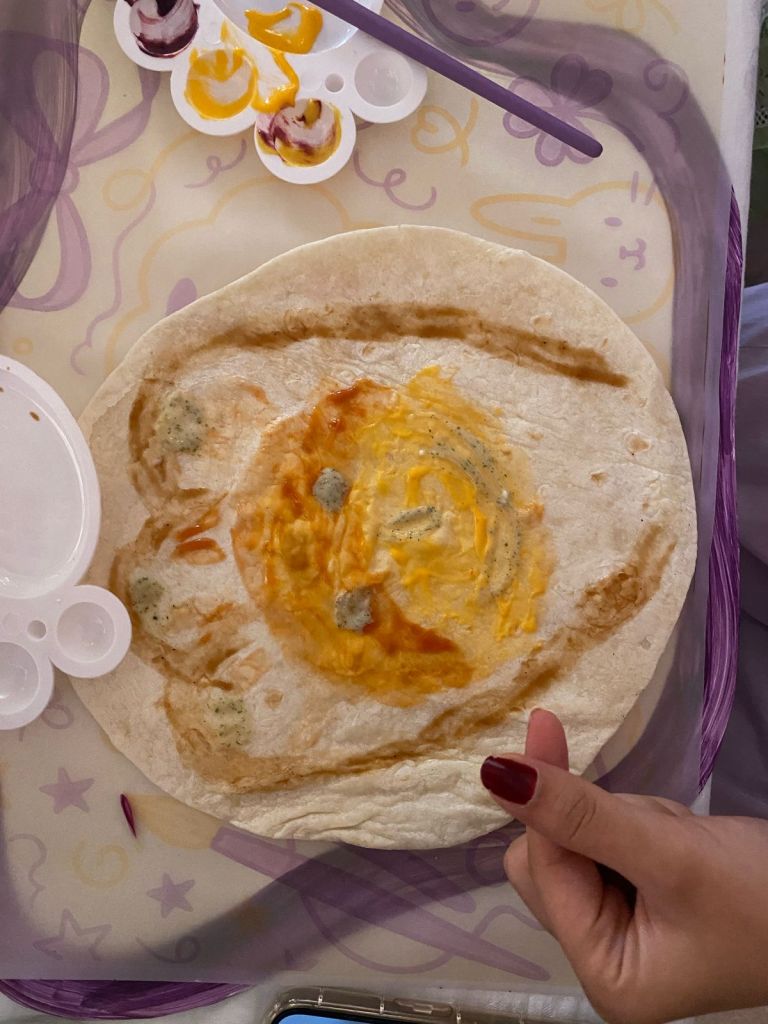
We crafted a range of vibrant, edible sauces, each representing a distinct color:
- Purple Sauce
- Pink Sauce
- Yellow Sauce
- Red Sauce
- Blue Sauce
- Black Sauce
- Brown Sauce
- White Sauce
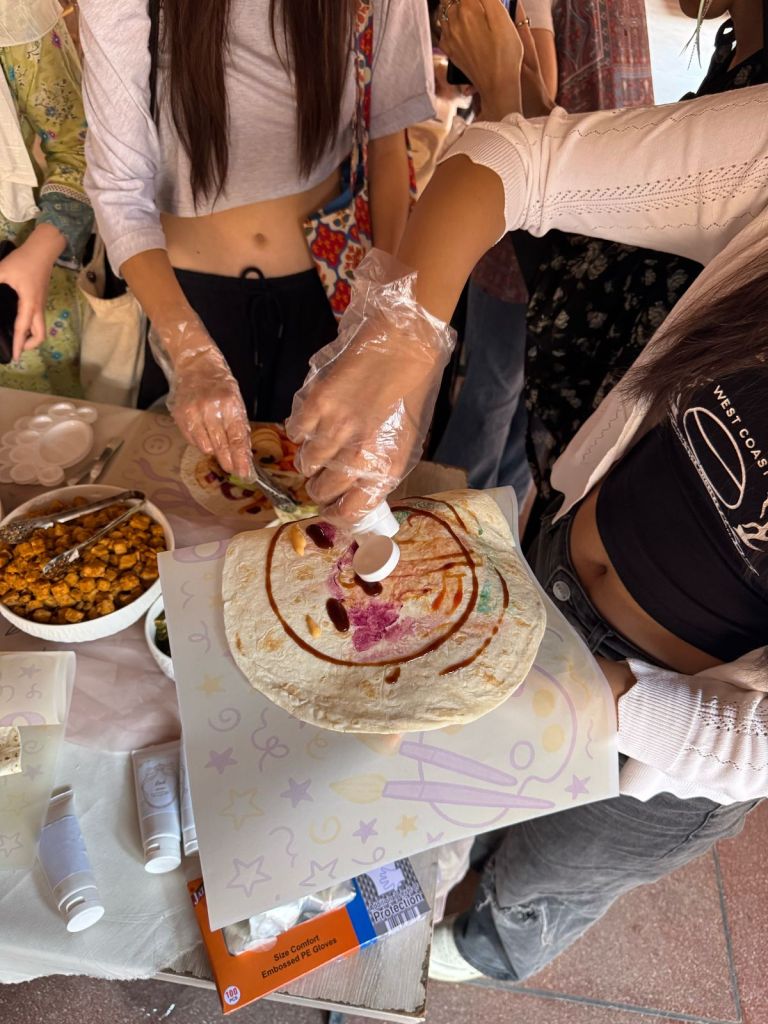
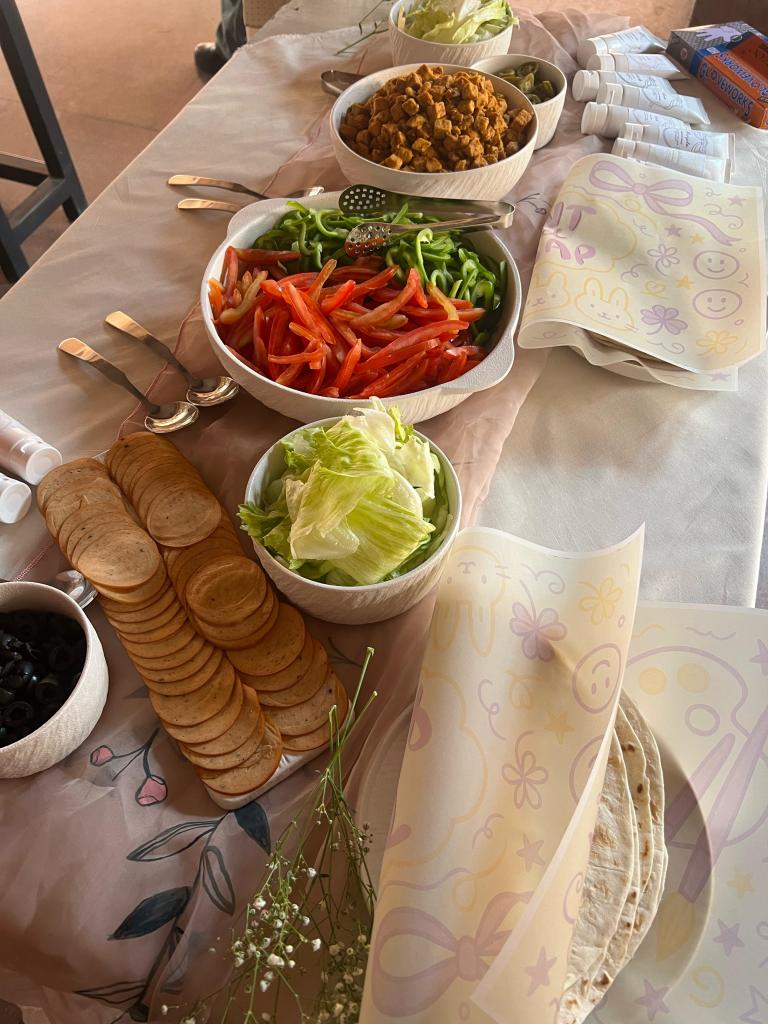
These sauces were poured into paint tubes, turning them into edible “paints” and mimicking an artist’s toolkit. We added custom-designed name tag stickers to each tube to give them personality and highlight their unique flavor identities.
Visual Style and Setup
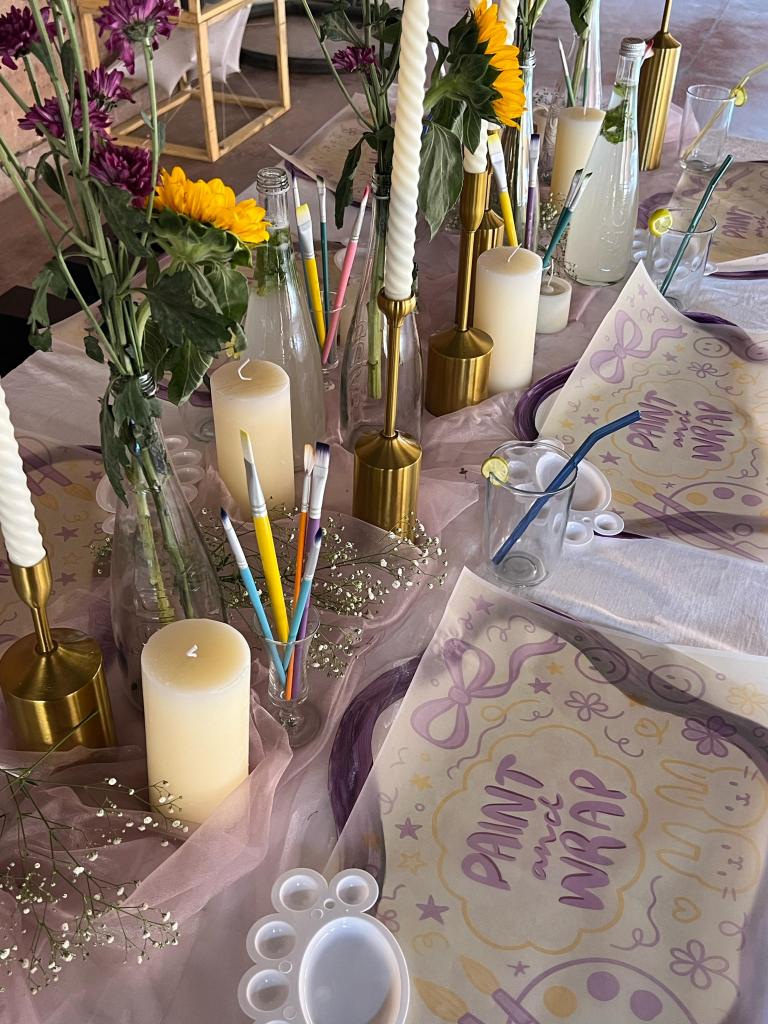
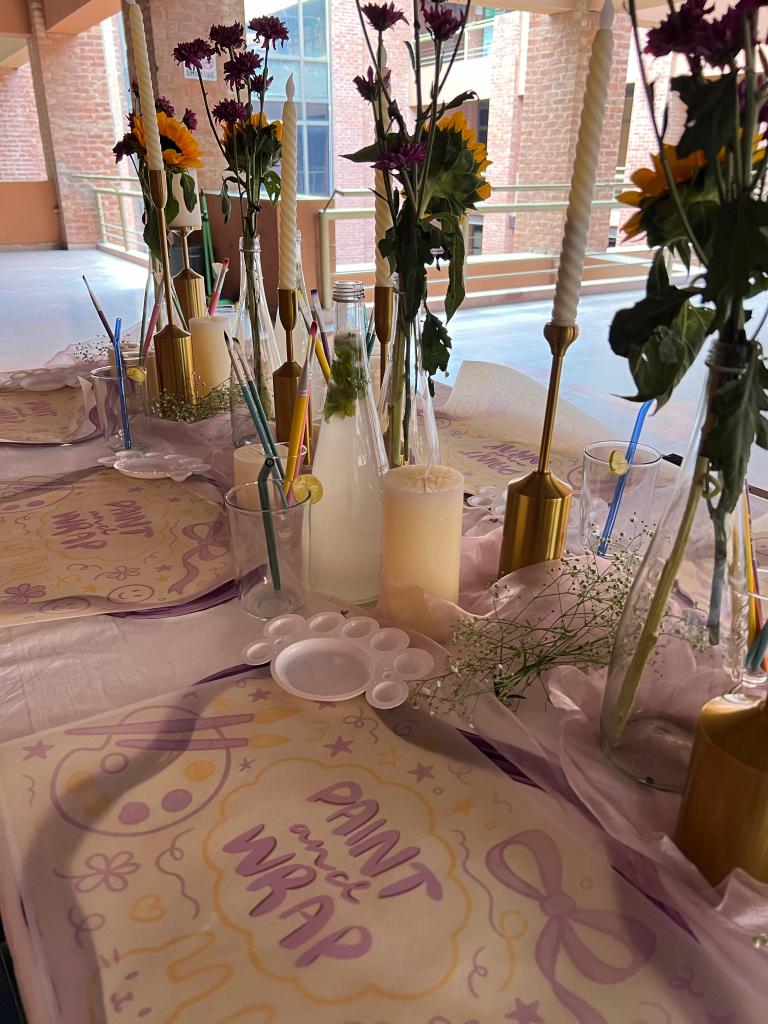
A strong emphasis was placed on aesthetics, with a soft, coquette-inspired theme shaping the visual language. The table settings featured delicate ribbons, candlelight, floral vases, and elegant tablecloths to create a dreamy, welcoming atmosphere. Soft background music enhanced the ambiance. We also designed our own butter paper and crafted personalized invitation cards to elevate the experience and add a thoughtful, memorable touch.
The Activity
Guests were invited to choose a tortilla, serving as their edible “canvas”—and use paintbrushes to decorate it with the sauces, guided by creative prompts. Once they finished painting, they could add toppings like chicken and pepperoni, roll it into a wrap, and enjoy their creation alongside a refreshing glass of lemonade.
Final Thoughts
Paint n Wrap was more than a meal; it was a celebration of creativity, play, and shared joy. By turning tortillas into canvases and sauces into paint, we encouraged participants to break away from traditional eating and engage with their food as a personal expression. The experience fostered connection, conversation, and delight. This project reminded us of the power of thoughtful design, the joy of collaboration, and how even everyday ingredients can be reimagined into a meaningful, multi-sensory experience.

Group 2: The Sandwich Situation
Participating Students: Amna Saleem, Eesha Kamran Qureshi, Hibba Gulzar, Malaika Ali, Meerab Mustanser Bhandara, Nida Rehman, Tayyaba Amir, Zahra Scherezade Salman Zia, Zikriya Tariq
(Text by Students)
Project Overview
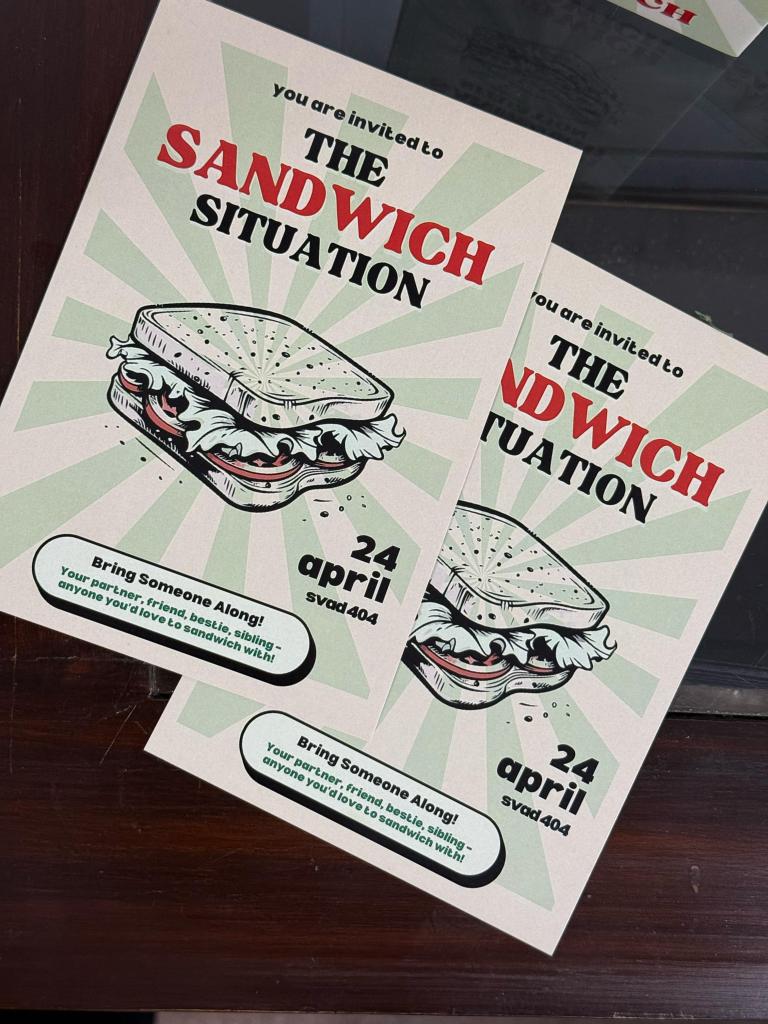
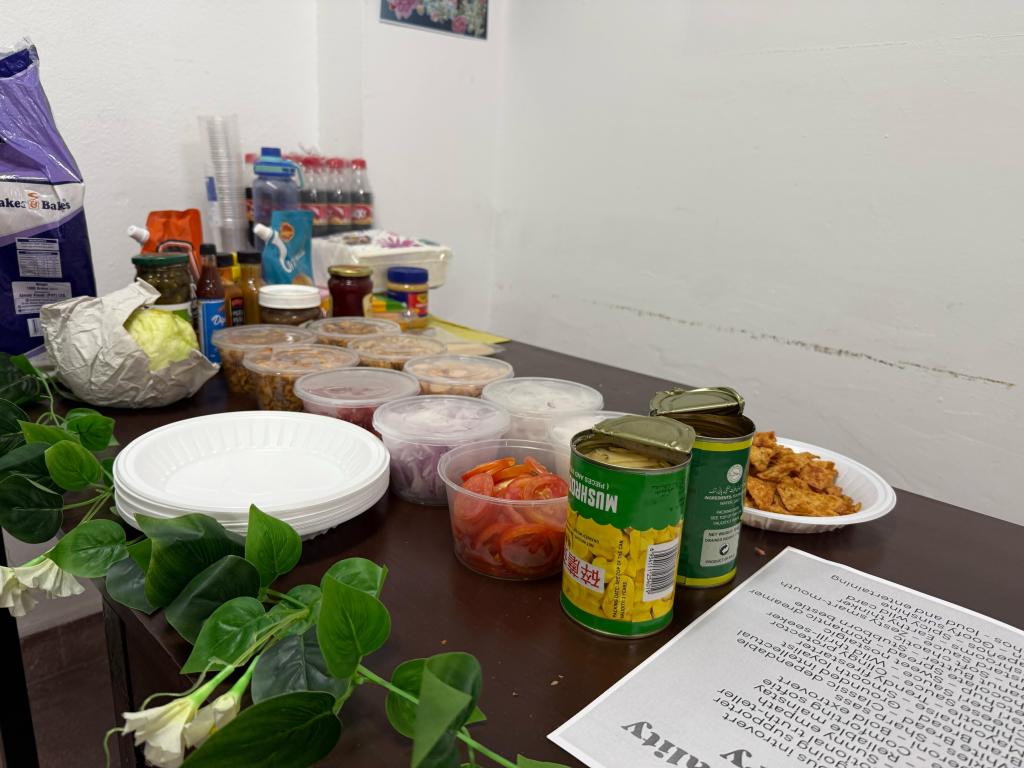
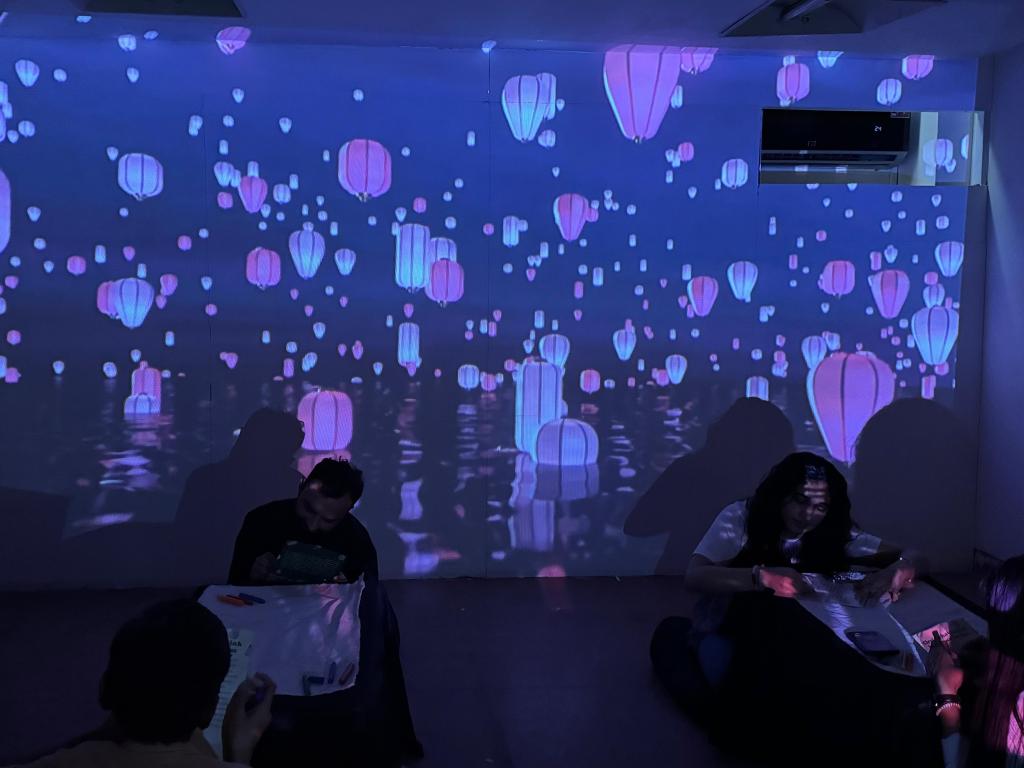
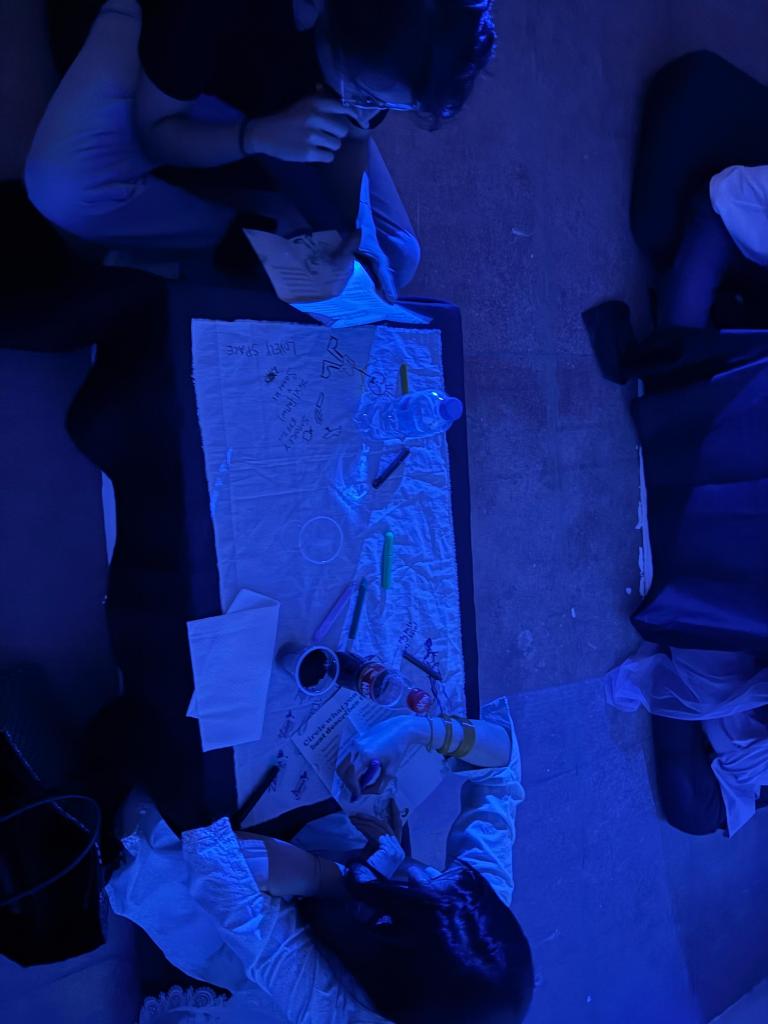
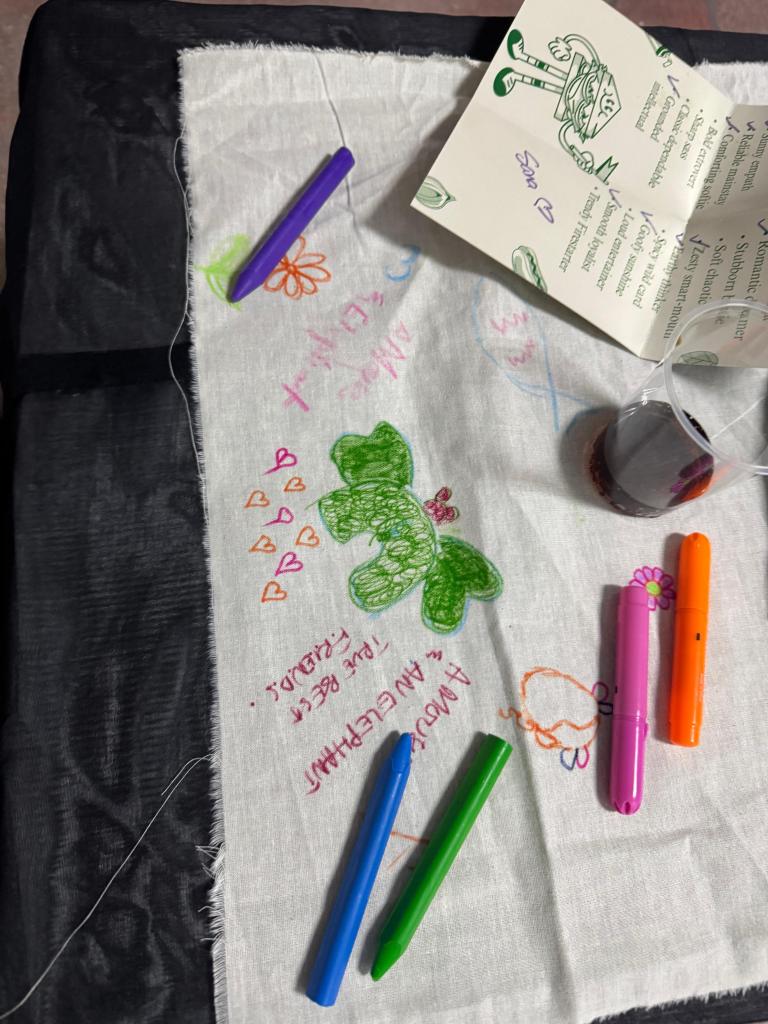
The sandwich situation was an interactive culinary event aimed at sparking connection, laughter and storytelling through personalized sandwiches based on personality traits. With two tables, four chairs and a backdrop of projection we hosted four guests to a cozy fun setting. The guests were greeted and seated by our waiters. Each received a personality checklist menu to fill out for their partners. The process led to lots of laughter, teasing and curiosity as they imagined what sandwich their partner’s trait would become.
Process
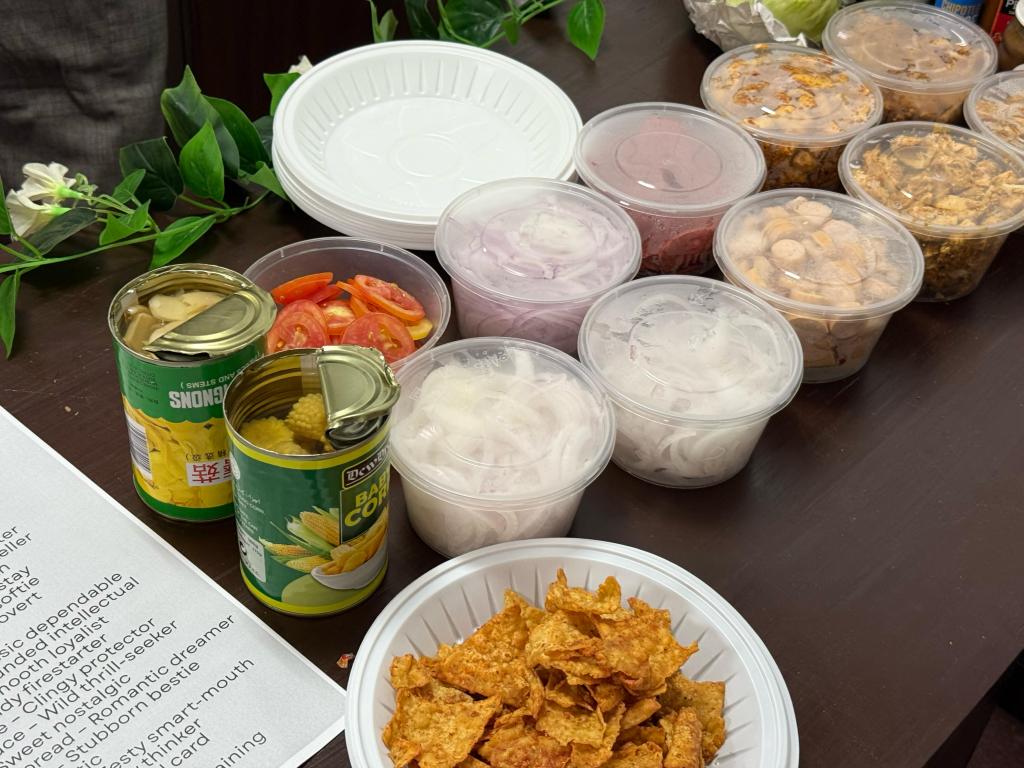
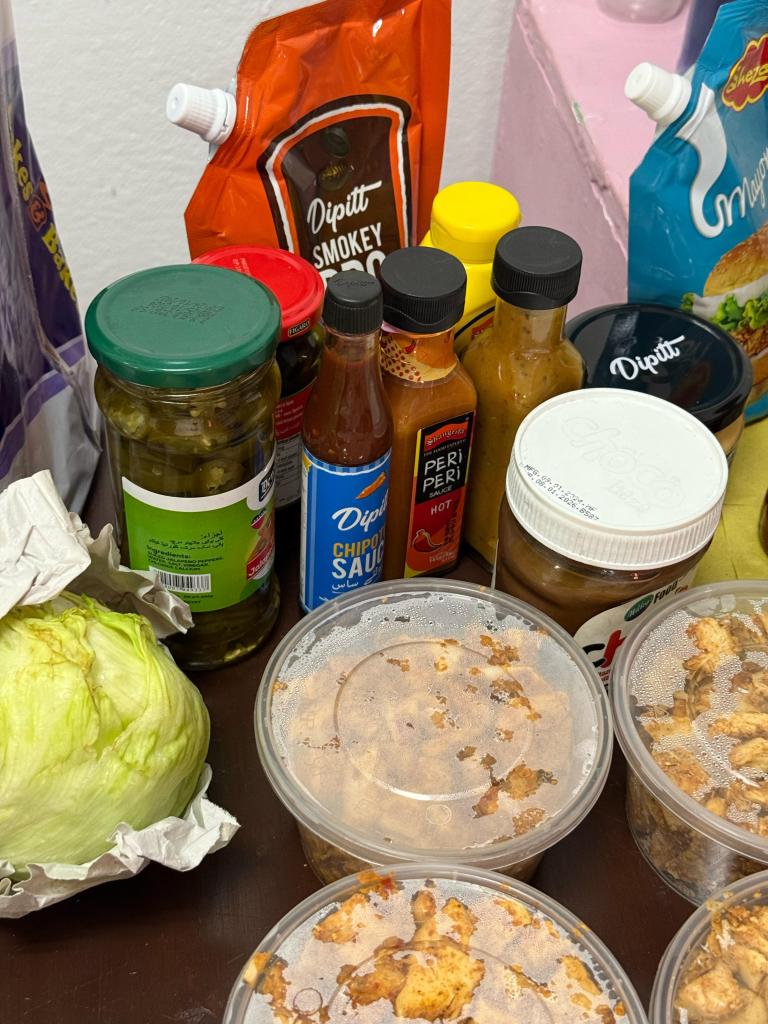
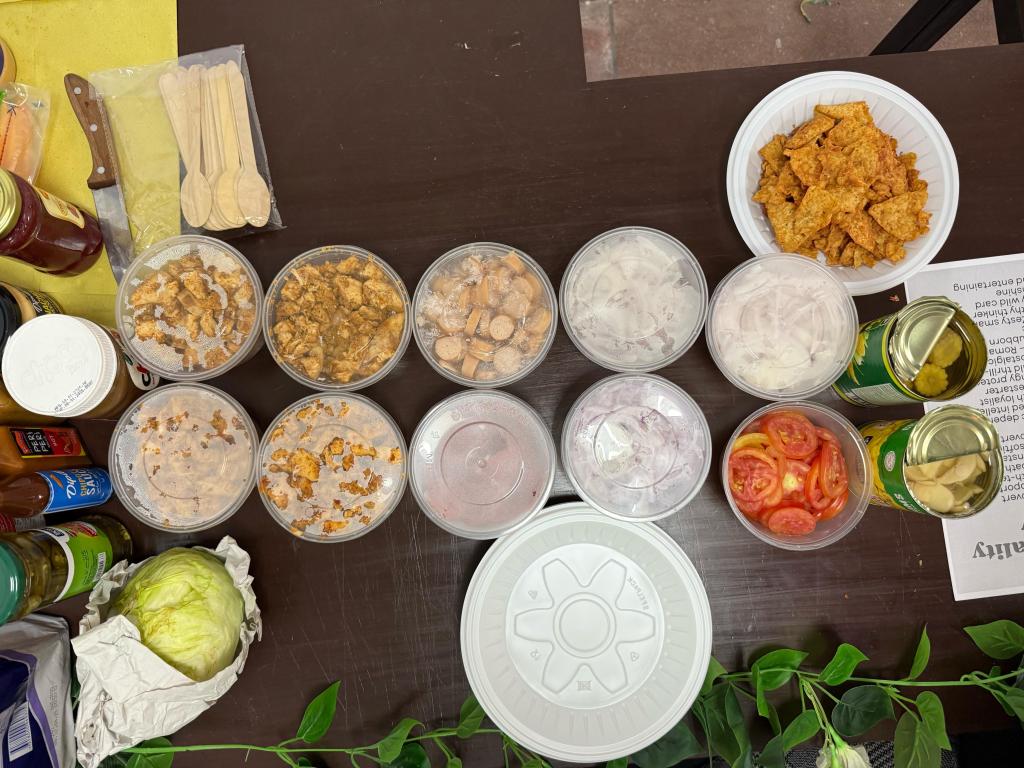
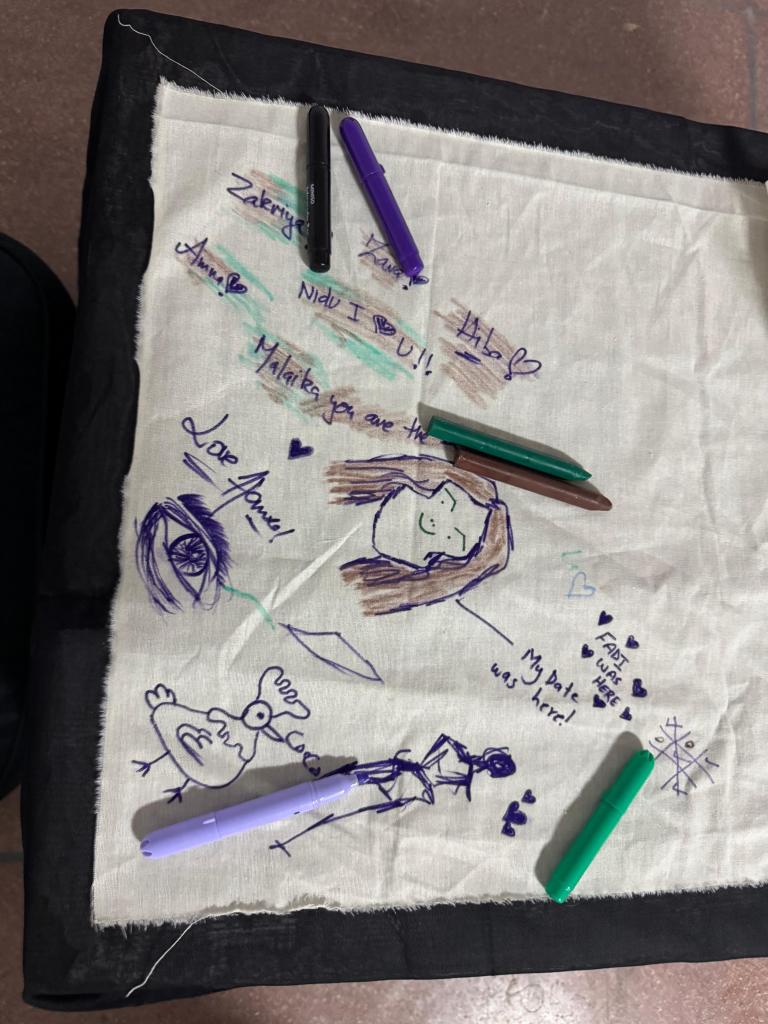
Once the checklist was handed to the chefs the kitchen got extremely busy. The sandwich counter was rushed due to limited space and high turnout yet our three chefs managed well and served sandwiches as soon as possible. In the meantime, when sandwiches were being made, the table was covered with white fabric and few markers so the guests could draw or play games.
Response
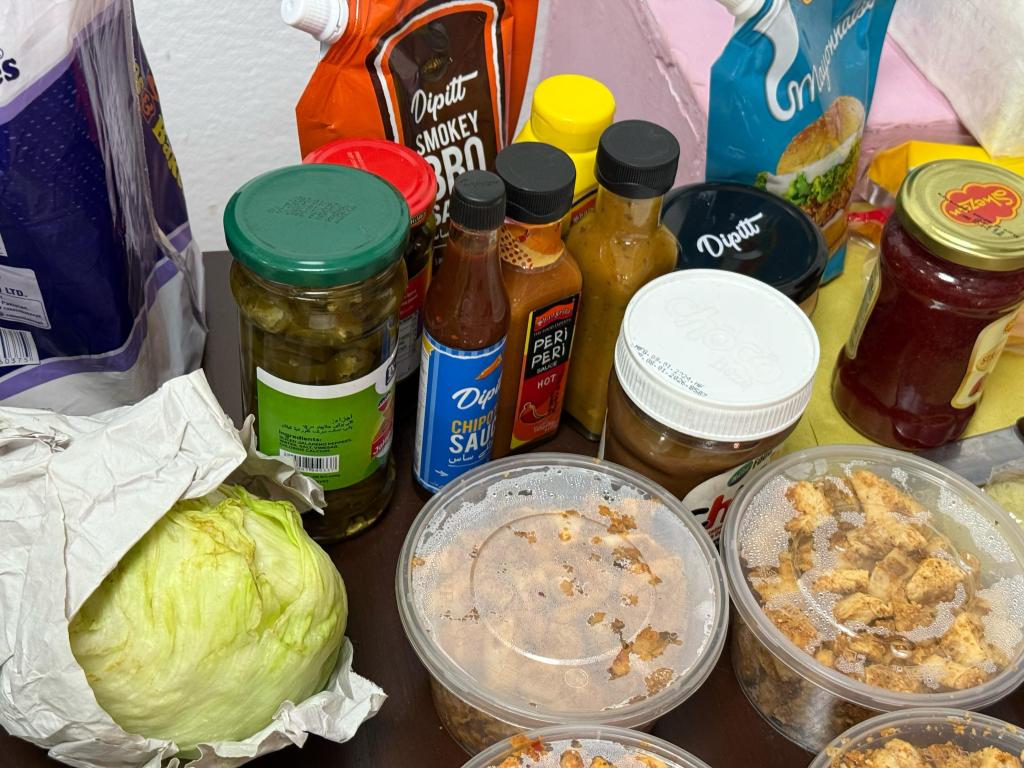
Moving towards the reaction and conversations – the best part was watching their reaction to the first bite of the sandwiches.Some were thrilled while others were shocked by the strange combinations. One guest especially came to the counter saying she never knew nachos and nutella would be such a great combo while others’ reactions were hilariously weird. These moments sparked real conversations as intended, fulfilling our aim. Before leaving guests fill out a review card to reflect their experience or leave a message for eachother – like a token of memory to carry with them. Surprisingly many guests wanted to keep the checklist menu as a memory so we happily gave them. The feedback was overwhelmingly positive calling it creative, unexpected and fun. The blend of food and personality left a lasting impression in my perspective.
Challenges and Reflections
The only issue was crowd control, as many more guests showed up than we expected. With a small room and seating for four caused a bit of chaos. But our team tried our best to handle it thus the environment remained relaxed. Therefore the sandwich situation turned out to be more than a food event. It was a space for conservation, connection, fun and storytelling. Despite some challenges in my opinion it was a success.
The project came to life thanks to a team of passionate and creative individuals. The Design Team, led by Tayyaba Amir and Meerab Bhandara, developed the overall concept and structure. The Decor Team—Hiba, Zikriya, Nida, and Zara—created the inviting ambiance that makes the space feel warm and welcoming. The Chef Team, including Amna Saleem, Malaika Ali, and Eesha Qureshi, prepared the sandwiches with care, ensuring that the food matched the thoughtful spirit of the event. Execution was a collaborative effort, with every team member playing a vital role.





Group 3: Communal Diner: A Taste of War and Resilience in Pakistan
Participating Students: Abner Aamir, Fatima Nauman, Ghias Ahmed, Haleema Khan, Huda Imran, Javeria Bashir, Mahnoor Ahmer, Muhammad Saad, Noor-ul-Iman, Qazi Abdul Ahad, Qibtah Abbas
(Text by Students)
Project Overview
Communal Dinner is a conceptual food design project that reimagines the role of food during times of war, migration, and national crisis. Drawing from historical events such as the Partition of 1947 and military conflicts in Pakistan, the project aimed to recreate a communal dining space reflective of resilience, scarcity, and cultural continuity.
Objective
The core objective was to use food as a medium to explore how communities in Pakistan have responded to conflict. By curating a dining experience inspired by rations, refugee meals, and wartime customs, we intended to evoke a sensory and emotional engagement with history.
Menu and Symbolism
The menu was curated to reflect minimal, accessible meals that sustained people during crisis:
- Welcome Drink: Water (Paani) – Symbolic of hospitality and survival.
- Starter: Roasted Chana & Peanuts – Common, shelf-stable snacks often consumed during displacement.
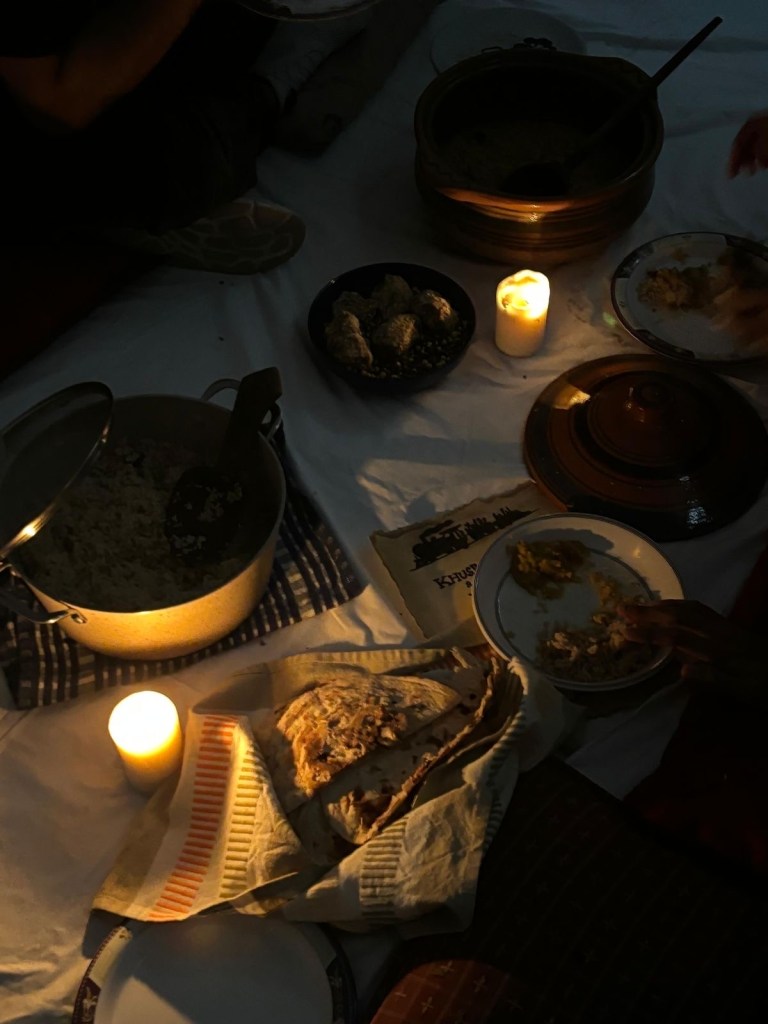
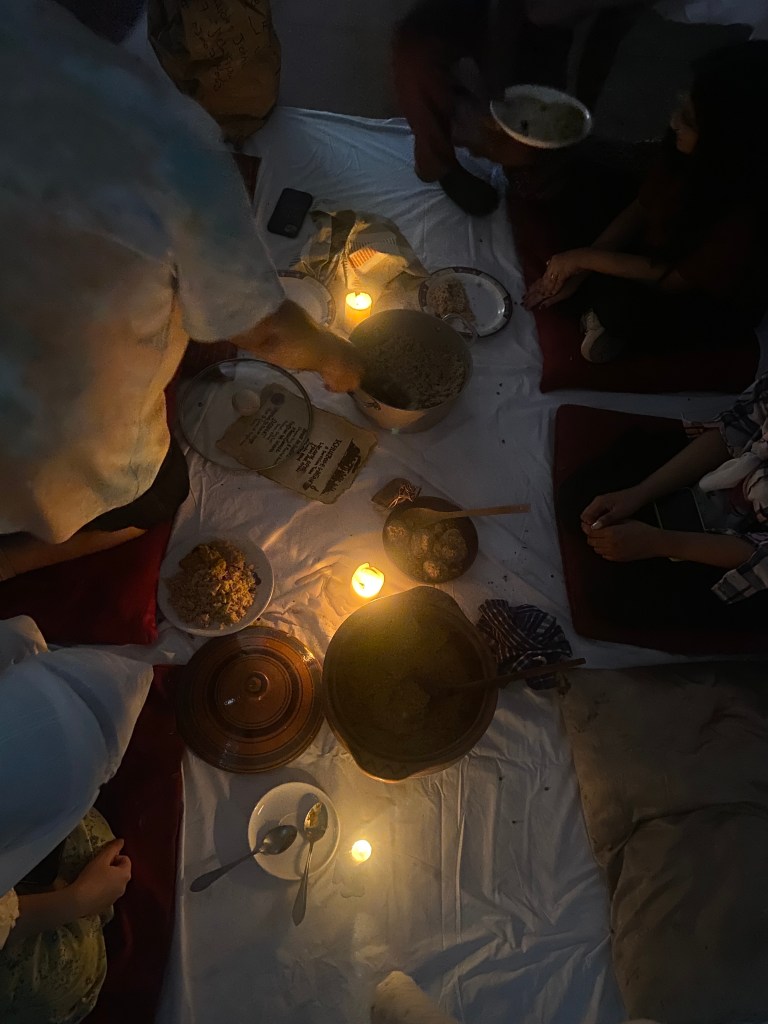
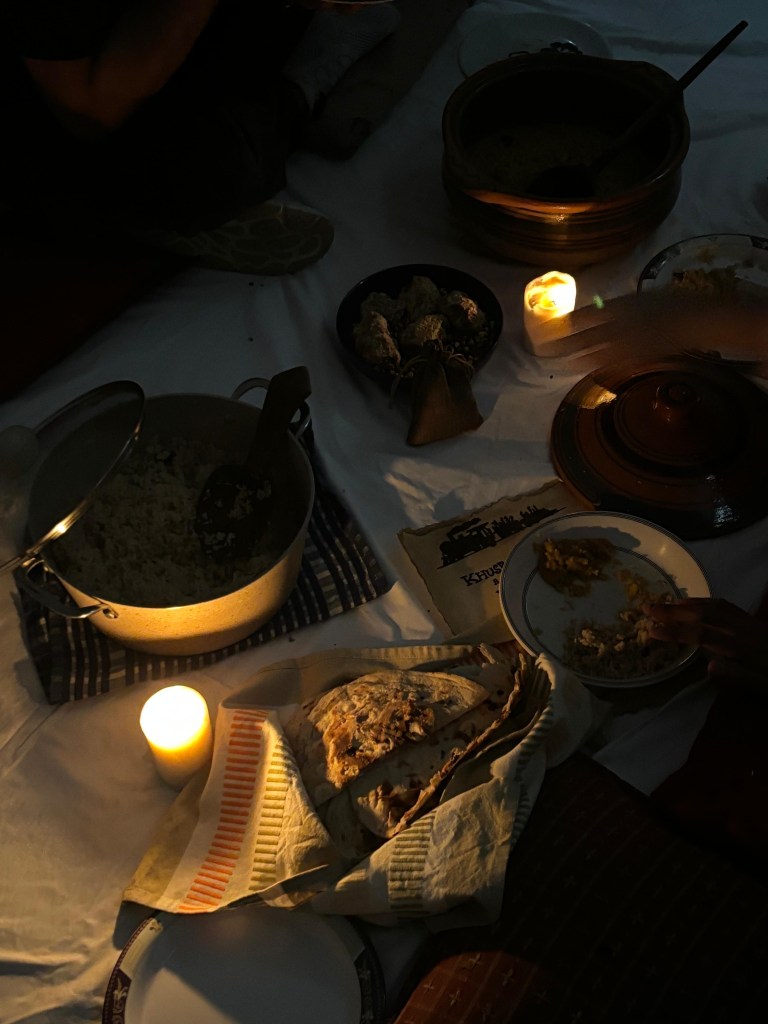
- Main Course: Khichdi, Roti, Soupy Daal, Pickle – Representative of ration-style food served in refugee camps or to soldiers.
- Dessert: Gur (Jaggery) – A simple comfort, often shared in rural and low-resource settings.
Each item was intentionally chosen for its cultural and historical resonance.
Installation and Environment
The space was designed to simulate a refugee or military camp environment:
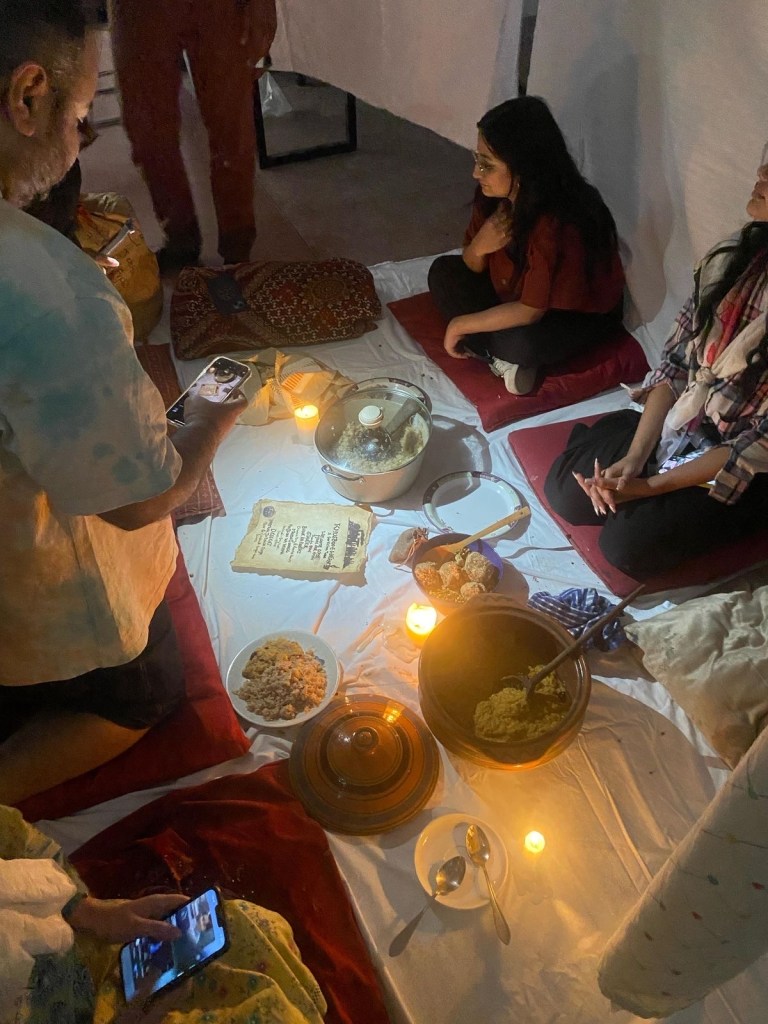
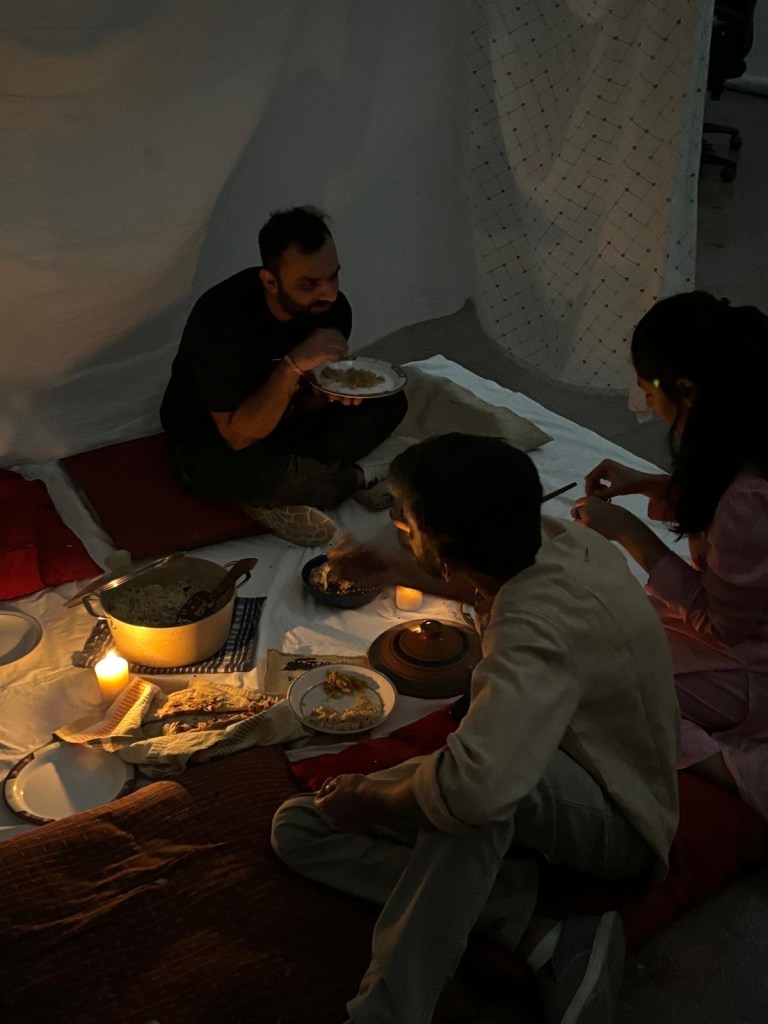
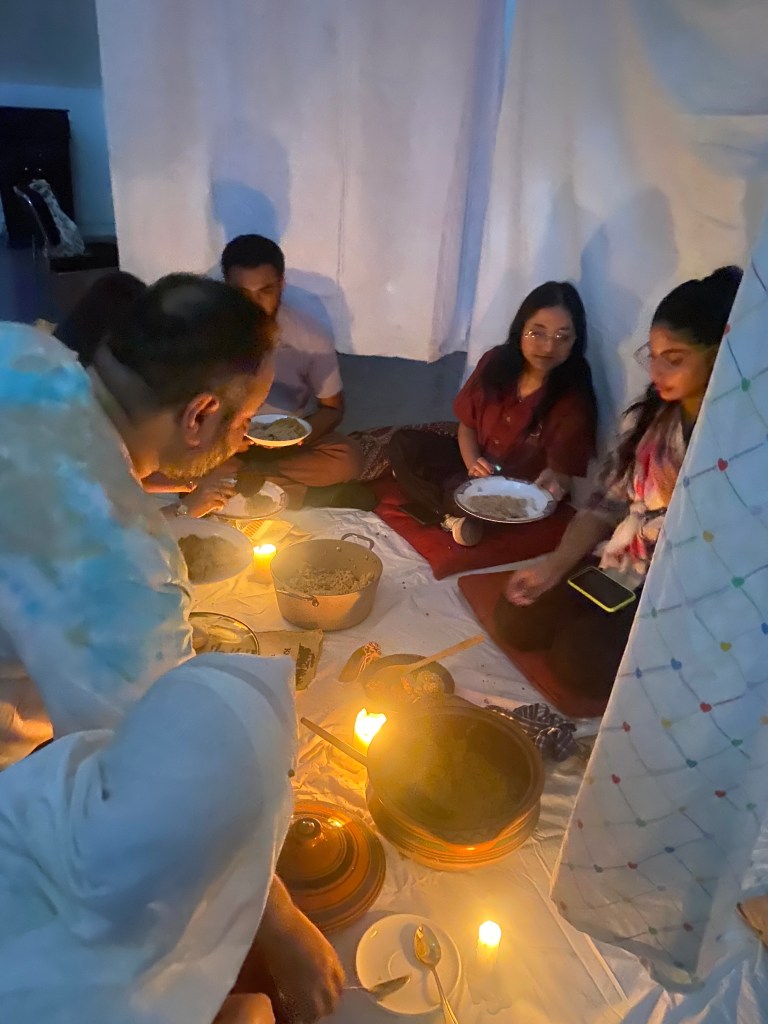
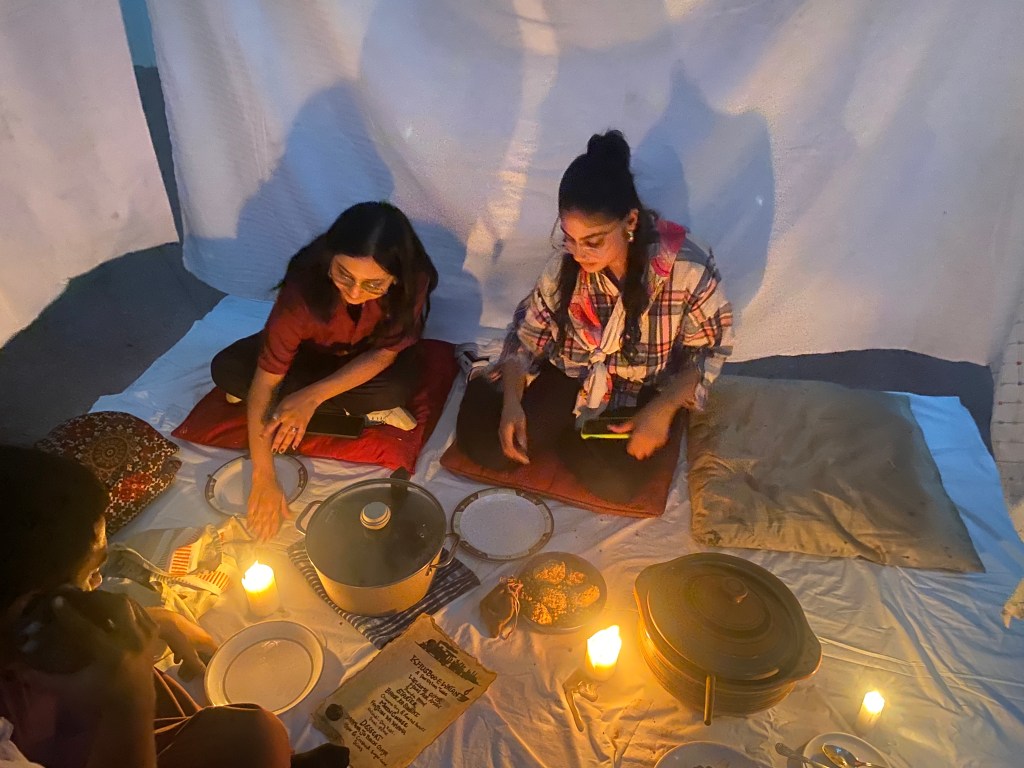
- Floor seating on a traditional dastarkhwan promoted communal eating.
- Use of mud utensils, mitti cups, and steel plates reflected the resourcefulness seen in crisis settings.
- The tent-like setting, dim lighting, barbed wire visuals, and handwritten maps added context, reinforcing the atmosphere of displacement.
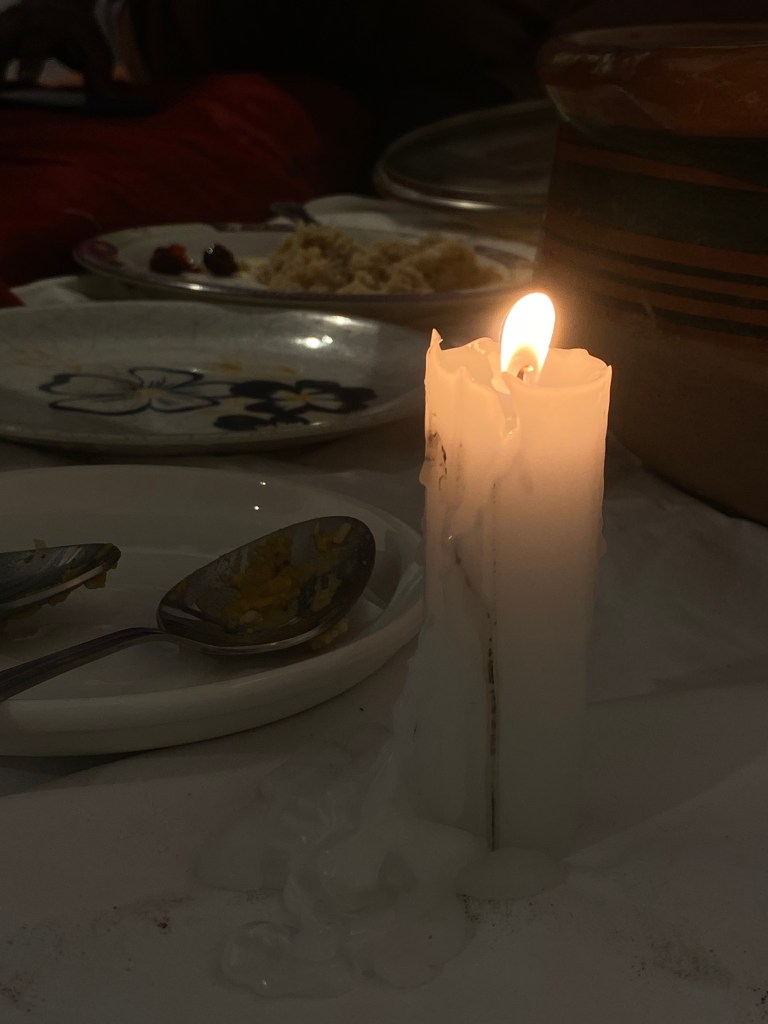
- Props such as candles and distressed fabric contributed to a feeling of austerity and resilience.
This immersive setup aimed to ground the experience in realism while prompting reflection.
Reflection
The project allowed us to critically explore the emotional, political, and cultural layers of food consumption during wartime. It emphasized how even the most basic meals can hold deep collective memory and identity.
Through collaborative design, storytelling, and spatial curation, we were able to transform food into a vehicle of remembrance and empathy. The experience highlighted the potential of food design to address socio-historical narratives in a meaningful and accessible way.
Conclusion
Communal Diner served as a reminder that food is more than sustenance—it is a reflection of shared history, resilience, and identity. In times of crisis, it becomes a source of comfort, continuity, and connection. This project stands as an attempt to preserve and honor that legacy through experiential design.






 Laiba Aslam